
Temporal and Homeostatic Mechanisms of Synaptic Plasticity
Chapter from the book:
Başar,
Ü.
&
Öztürk,
İ.
(eds.)
2026.
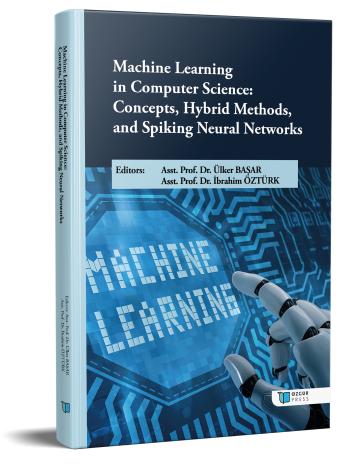
Machine Learning in Computer Science: Concepts, Hybrid Methods, and Spiking Neural Networks.
Synopsis
This chapter provides a comprehensive examination of the biologically plausible synaptic plasticity mechanisms fundamental to learning in Spiking Neural Networks (SNNs). Because SNNs, recognized as the third generation of neural network models, encode information through the precise temporal dynamics of discrete spikes, learning is intrinsically dependent upon the continuous modulation of synaptic weights and delays. We initially review the mechanics of chemical synaptic transmission and classical Hebbian plasticity, which are operationalized biologically through Long-Term Potentiation (LTP) and Long-Term Depression (LTD).
The analysis subsequently advances to Spike-Timing Dependent Plasticity (STDP), a critical unsupervised mechanism wherein the precise relative timing of pre-synaptic and post-synaptic action potentials dictates both the magnitude and direction of synaptic weight modifications. To mitigate the inherent risk of runaway network excitation driven by these localized STDP rules, the chapter elucidates the essential regulatory role of homeostatic plasticity. Specifically, it details how activity-dependent synaptic scaling globally adjusts neuronal excitability to maintain stable, target firing rates without disrupting the relative weight distributions established by STDP.
Finally, the integration of dopamine-modulated plasticity is examined, illustrating how global neuromodulatory reward signals act as reward-prediction errors to consolidate local STDP-induced changes. This mechanism bridges the gap between unsupervised Hebbian timing rules and complex, goal-oriented reinforcement learning. Collectively, these temporal and homeostatic principles establish a robust theoretical foundation for the development of more advanced learning algorithms and supervised mapping techniques in artificial networks.
How to cite this book
License

This work is licensed under a Creative Commons Attribution-NonCommercial 4.0 International License.
Published
DOI
Categories
Copyright (c) 2026 Ülker Başar- İbrahim Öztürk; Yousef Farhang- Ülker Başar- Gökhan Halimoğlu- İbrahim Öztürk- David M. Halliday- Nigar Tuğbagül Altan Gülgün- Havva Gül Koçer- Birkan Büyükarıkan- Esin Ayşe Zaimoğlu