
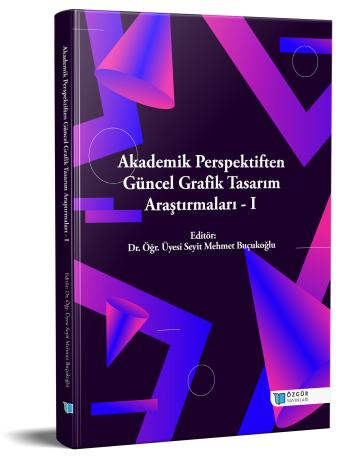
From Modernist Grid to Rhythmic Composition in Graphic Design: An Analysis of Niklaus Troxler’s Posters
Chapter from the book:
Buçukoğlu,
S.
M.
(ed.)
2026.
Current Research in Graphic Design from an Academic Perspective - I .
Synopsis
A grid is a fundamental tool that provides the basic concept for determining the positions of design elements within a design. From a graphic design perspective, the concept of a grid serves as an organisational tool and a structural system within the design. Designers have attempted to create a design language in the field of graphic design by employing different structural systems within the grid across various periods. In this context, during the International Typographic Style period, the grid was functionalised and used to create an objective visual communication language and to establish a standardised design plane. During this period, the concept of the design grid was used to remove subjectivity from design, making it measurable and systematic. However, with technological developments and changing graphic design practices due to digitalisation, the grid has undergone a transformation, moving away from systematic modular structures to become more original, flexible, and based on the designer's intuition. Designer Niklaus Troxler's poster designs can be considered examples of this transformation. Niklaus Troxler conceals the concept of the grid in his designs, which he creates with visual flow, continuity, with diagonal rhythm, transforming it into a system that forms the structure of the design hidden in the background. Niklaus Troxler conceals the concept of the grid within his designs, which are formed through visual flow, continuity, and rhythm, transforming it into a grid system with a diagonal rhythm that constitutes the structure of the design hidden in the background. In this qualitative research study conducted through document analysis, the theoretical framework of the modern understanding of the grid is examined, and Niklaus Troxler's posters, which transform the concept of the grid into a rhythmic composition, are studied and evaluated.
The study suggests that the designer can improvise with the concept of the grid in their work, using it to create an intuitive structure, and that the grid system in design is a visual expression of its transformation into a rhythmic composition.
How to cite this book
License

This work is licensed under a Creative Commons Attribution-NonCommercial 4.0 International License.
Published
DOI
Categories
Copyright (c) 2026 Seyit Mehmet Buçukoğlu; Çiğdem Tanyel Başar- Ayşegül Sezer- Ayfer Demirel- Çağdaş Topçu- Süeda Şatır Toruk