
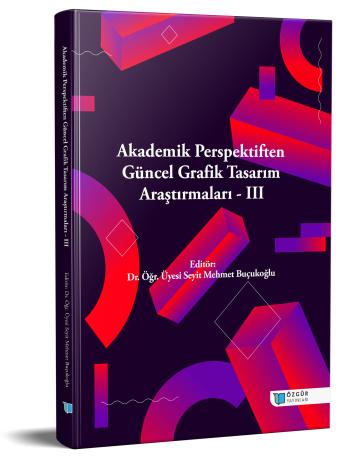
Graphic Design and Medical Illustration Production Workshop for Basic Medical Education
Chapter from the book:
Buçukoğlu,
S.
M.
(ed.)
2026.
Current Research in Graphic Design from an Academic Perspective - III .
Synopsis
Medical illustration is an interdisciplinary design field that aims to communicate complex biomedical information through visual representations. Combining principles of graphic design, anatomical knowledge, and scientific visualization, this field plays a significant role in medical education and health communication. This chapter examines medical illustration within the context of graphic design and discusses its theoretical foundations, historical development, and production processes.
The first part of the chapter introduces the concept of medical illustration and reviews its historical development, highlighting the evolution of anatomical visualization from the Renaissance to contemporary digital practices. The chapter then explores scientific representation and visualization approaches, focusing on realistic, schematic, and hybrid forms of representation used in medical visualization. In addition, the role of graphic design principles—such as visual hierarchy, Gestalt principles, grid systems, color semantics, and typography—is discussed in relation to the effective communication of scientific information.
The chapter also examines the pedagogical role of visual materials in learning processes by referring to cognitive load theory and multimedia learning principles. Furthermore, the production process of medical illustration is explained through stages including research, sketch development, digital production, and expert validation. Ethical issues such as scientific accuracy, copyright, and patient privacy are also addressed. Finally, a studio-based project model is proposed to support students in developing their ability to communicate scientific knowledge through visual design.
How to cite this book
License

This work is licensed under a Creative Commons Attribution-NonCommercial 4.0 International License.
Published
DOI
Categories
Copyright (c) 2026 Seyit Mehmet Buçukoğlu; Ayfer Demirel- Onur Toprak- Fırat Bilal