
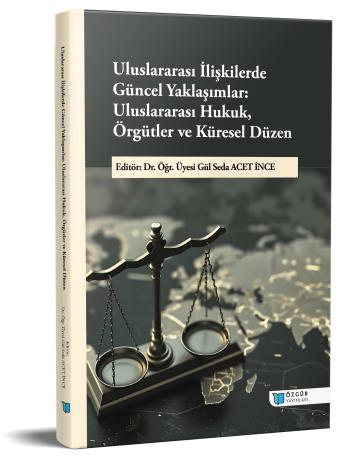
Trump Doctrine as a Hegemonic Project
Chapter from the book:
Acet İnce,
G.
S.
(ed.)
2026.
Current Approaches in International Relations: International Law, Organizations, and the Global Order.
Synopsis
The aim of this study is to evaluate the United States National Security Strategy based on Bob Jessop's concept of the Hegemonic Project, while discussing the Trump Doctrine in the context of the establishment and maintenance of hegemony in international relations. It also discusses the place of the detained example of the Venezuelan president in this hegemonic project.
The doctrine, which we can interpret as the process of reallocating the hegemonic power of the USA, which has weakened in parallel with the rise of China and Asian economies, reminds us of the old face of US hegemony and signals its new policies. Neoliberal policies followed since the early 1970s have caused declines in the economic and political independence of countries. The economic, political and cultural hegemony of the USA has been decisive in the restructuring of country economies and the removal of obstacles to capital accumulation at the global level. The inevitable emergence of counter-hegemony establishments in this process has also been the cause of global crises. The Doctrine, published today under the Trump presidency, outlines the struggle of the US hegemony against counter-hegemonies.
In this study, he claims that establishing hegemony in international relations is always in organic connection with the accumulation crisis of the capitalist system. Therefore, based on the above context, I will try to reveal the place of accumulation strategies in the allocation of hegemony and how the US's Trump doctrine will be a guide in reading these strategies. And I will argue that it is possible to see the detention of the Venezuelan president as a result of the capitalist accumulation model being abandoned by its rival.
How to cite this book
License

This work is licensed under a Creative Commons Attribution-NonCommercial 4.0 International License.
Published
DOI
Categories
Copyright (c) 2026 Gül Seda Acet İnce; Ahmet Üçağaç- Figen Aydın- Ayşe Gökçe Arslan- Burcu Gökatalay- Meliha Elif Güven- Hande Sapmaz- Zuhal Çalık Topuz- Canan Kışlalıoğlu- Sıddık Arslan- Burak Kurtcebe