
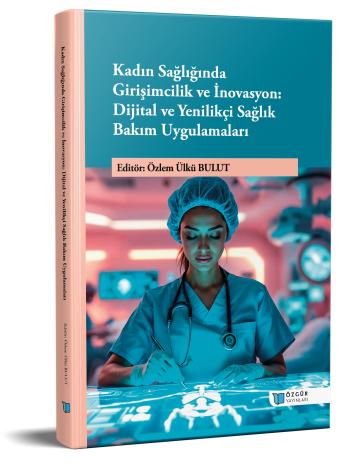
Vertigo in Pregnancy
Chapter from the book:
Bulut,
Ö.
Ü.
(ed.)
2026.
Entrepreneurship and Innovation in Women's Health: Digital and Innovative Healthcare Applications.
Synopsis
Pregnancy is a unique period characterized by significant physical, hormonal, and psychological changes in women. During this process, multiple organs and systems may be affected, particularly the circulatory, respiratory, gastrointestinal, musculoskeletal, dermatological, and sensory systems. In addition to vestibular disorders such as Vestibular migraine (VM), Benign paroxysmal positional vertigo (BPPV), Meniere’s disease (MD), Persistent postural-perceptual dizziness (PPPD), and Vestibular schwannoma (VS), increased body weight and alterations in the musculoskeletal system may also emerge during pregnancy or exacerbate pre-existing symptoms.
The management of vestibular disorders during pregnancy is particularly complex due to physiological changes, limited safety data regarding pharmacological treatments, and ethical constraints surrounding the inclusion of pregnant individuals in clinical trials. Therefore, safe and noninvasive approaches are prioritized in diagnostic and therapeutic processes. In this context, vestibular assessment, appropriate repositioning maneuvers, and exercise-based vestibular rehabilitation play a central role.
Recent advances in health technologies have also contributed to the management of dizziness and vestibular symptoms during pregnancy. Wearable sensors and mobile health applications that enable remote monitoring allow for the objective assessment of postural sway and nystagmus. Furthermore, the development of pregnancy-safe imaging protocols, surgical planning tools, and artificial intelligence–assisted analyses has introduced an innovative perspective to diagnostic and follow-up processes. These comprehensive approaches support the safer and more effective management of vestibular symptoms during pregnancy.
How to cite this book
License

This work is licensed under a Creative Commons Attribution-NonCommercial 4.0 International License.
Published
DOI
Categories
Copyright (c) 2026 Özlem Ülkü Bulut; Yeliz Başar- Gülcan Karabulut- Zeynep Daşıkan- Duygu Güleç Şatır- Simge Öztürk- Nurdilan Şener Çetin- Sermin Timur Taşhan- Ayla Güllü- Özge Kale Peşan- Nedim Turgut- Muhammed Pınar- Mehtap Temiz