
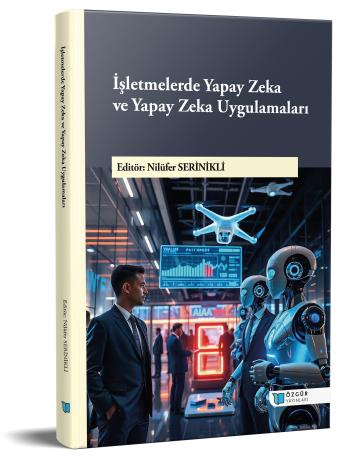
Data Security and Privacy in the Use of Artificial Intelligence in Accounting
Chapter from the book:
Serinikli,
N.
(ed.)
2026.
Artificial Intelligence and Artificial Intelligence Applications in Businesses.
Synopsis
Technological advancements, the use of artificial intelligence (AI) technologies in accounting processes has become more widespread today. AI-based applications have provided ease and advantages in accounting processes through automated record keeping, big data analysis and error detection. They have increased efficiency in accounting operations. However, alongside these positive developments, they have also brought some problems. There are risks regarding data security and privacy. Concerns have arisen about the potential for data privacy breaches in the processing and storage of financial data by some AI applications. To prevent malicious attacks on access to customer information, internal financial reports and strategic decisions, efforts have been made to ensure data security and privacy. These efforts include the Personal Data Protection Law, the General Data Protection Regulation (GDPR) established by the European Union, strong encryption techniques for data security, multi-access control and cybersecurity measures. While AI-based applications have positive aspects, there are also areas where security measures need to be taken. Within this context, the study aims to inform information users about potential problems in data security and privacy arising from the use of artificial intelligence in accounting, proposed solutions and examples from Turkey and around the world. To this end, the study includes the concept of artificial intelligence, AI applications used in accounting, legal regulations regarding data security and privacy and provides information on some examples from Turkey and the world. The study concludes that while artificial intelligence applications offer advantages, they can also pose risks if legal regulations and precautions regarding data security and privacy are not taken. By establishing legal and ethical regulations and through future user implementation, the reliable use of artificial intelligence applications will be ensured.
How to cite this book
License

This work is licensed under a Creative Commons Attribution-NonCommercial 4.0 International License.
Published
DOI
Categories
Copyright (c) 2026 Nilüfer Serinikli; Erhan Gürleyen- Bülent Yıldız- Nurcan Bulut- Ayşe Nur Buyruk Akbaba- Maşide Gürcü- Mustafa Erbir- Hakan Kaya- Özlem Tek Mutlu- Murat Nazlı