
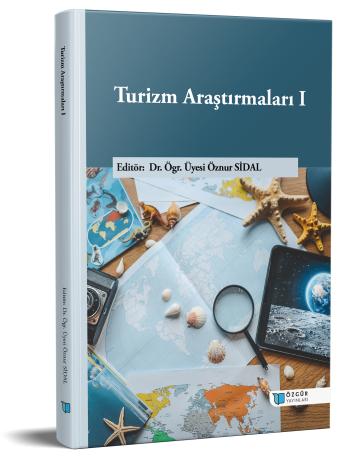
Tourism Research
Synopsis
Globalization, digitalization, and rapidly changing consumer expectations have transformed the tourism sector into a more dynamic and competitive structure than ever before. Today, destinations and tourism enterprises are no longer merely service providers; they have evolved into integrated systems that create value for visitors, design experiences, and are supported by advanced technologies. This transformation has also reshaped the direction of academic studies in the field of tourism, leading to increased attention to topics such as tourist experience, perceived value, smart tourism technologies, and experiential marketing. This book aims to bring together recent academic studies that address these changes in the tourism sector from different perspectives.
The sustainable development of tourism activities depends on the ability of destinations and businesses to effectively manage the value they offer to visitors. Today’s tourists do not only seek to purchase a service; they also expect to live unique, meaningful, and memorable experiences. For this reason, concepts such as customer satisfaction, perceived value, loyalty, and revisit intention have become increasingly important research topics in tourism literature. The growing competition among destinations forces tourism enterprises to provide higher value to customers, better understand their expectations, and develop strategies to increase satisfaction levels.
Another significant transformation in the tourism sector is the rapid expansion of digital technologies. Smart tourism applications, mobile technologies, big data analytics, artificial intelligence, and online platforms have fundamentally changed the way tourists plan and experience their travels. Through these technologies, tourists can access information more quickly, receive recommendations based on their personal preferences, and manage their travel plans more efficiently. However, the intensive use of technology also brings new discussion areas such as the loss of authenticity in experiences, information overload, and digital dependency. Therefore, it has become necessary to examine the effects of technology on tourist experience from a multidimensional perspective in tourism research.
With the strengthening of the experience-oriented approach in the tourism sector, experiential marketing practices have become an important competitive tool for businesses. Especially accommodation enterprises and thermal hotels operating within the scope of health tourism go beyond providing basic lodging services and aim to design holistic experiences that address both the physical and psychological well-being of their customers. In this context, the effects of experiential marketing practices on customer satisfaction, loyalty, revisit intention, and word-of-mouth communication have emerged as an important field of research in tourism literature.
The chapters included in this book present a multidimensional perspective on tourism by addressing current topics such as the effects of smart tourism technologies on tourist experience, the role of perceived value and customer satisfaction in destination competitiveness, and the outcomes of experiential marketing practices on customer behavior. These studies, prepared with the contributions of different researchers, include significant theoretical and practical findings and aim to contribute to the tourism literature.
I would like to thank all chapter authors for their valuable contributions to the preparation of this book. Bringing together different perspectives, this book is intended to serve as a useful resource for academics, graduate students, and industry professionals working in the field of tourism. It is my sincere hope that this work will guide future research and contribute to the development of the tourism sector.
Asst. Prof. Dr. Öznur SİDAL
Chapters
How to cite this book
License

This work is licensed under a Creative Commons Attribution-NonCommercial 4.0 International License.
Published
ISBN
DOI
Statistics
Categories
Copyright (c) 2026 Öznur Sidal- Dilek Eren- Mustafa İspir- Tuğrul Ayyıldız- Tolgahan Gülay