
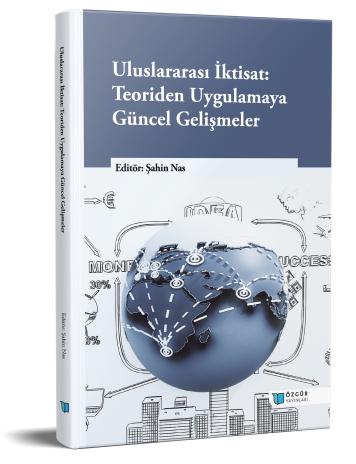
International Trade and Digitalization: A Bibliometric Analysis
Chapter from the book:
Nas,
Ş.
(ed.)
2026.
International Economics: Current Developments from Theory to Practice.
Synopsis
Improving and developing existing processes in international trade satisfies both consumers and producers, as well as various service providers in this field. Digitalization serves this purpose in international trade. The development of rapid technological advances and digitalization have influenced and transformed international trade by many channels. In this context, a highly productive and contemporary literature analyzing international trade and digitalization has emerged. This study conducted a bibliometric analysis using data from 1552 articles indexed in the Web of Science in the fields of international trade and digitalization. In the study, a co-word analysis was conducted based on the author's keywords. The science mapping method was used to visualize the obtained results. According to the results obtained, the international trade literature analyzes digitalization from many aspects, which has led to the emergence of new research areas and the expansion of the intellectual and analytical boundaries of the literature. Another result obtained from the study is that artificial intelligence is an emerging theme, and therefore, it will be analyzed more in the future within the international trade literature. Additionally, the inclusion of concepts such as sustainability and sustainable development in the analyzes indicates a shift away from the perspective that focuses solely on resource consumption and the economic dimension, toward an approach that incorporates environmental and social dimensions into the analysis. When examining the collaboration between countries where academic publications are produced, it is particularly noticeable that there is strong cooperation between the United States and China, the two largest actors in international trade and highly advanced in digitalization. Additionally, it is observed that among developed countries, there is strong collaboration and a high number of publications, whereas in underdeveloped countries, both collaboration and the number of publications is low.
How to cite this book
License

This work is licensed under a Creative Commons Attribution-NonCommercial 4.0 International License.
Published
DOI
Categories
Copyright (c) 2026 Şahin Nas; Ebru Arıcıoğlu- Pınar Tat- Nil Sirel Öztürk- Şahin Nas