
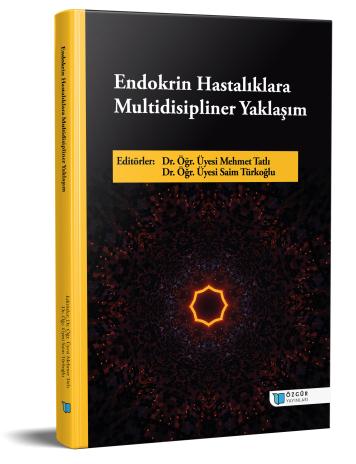
The Systemic Dimension of Primary Hyperparathyroidism and Its Multidisciplinary Management
Chapter from the book:
Tatlı,
M.
&
Türkoğlu,
S.
(eds.)
2026.
A Multidisciplinary Approach to Endocrine Disorders.
Synopsis
Primary hyperparathyroidism (PHPT) is a systemic endocrinopathy characterized by autonomous and excessive secretion of parathyroid hormone (PTH), with a clinical spectrum ranging from asymptomatic forms to severe organ damage. With the widespread use of routine biochemical screening today, the vast majority of patients are detected before developing classic symptoms. However, this silent clinical picture continues to impose a subtle metabolic burden and low-grade chronic inflammation on the body due to the widespread tissue expression of PTH receptors.
Careful evaluation of biochemical findings and exclusion of secondary causes are essential during diagnosis. Preoperative localization studies provide the anatomical roadmap that determines the surgical strategy, while intraoperative PTH monitoring is a critical navigation tool that confirms the success of the cure. A successful surgical intervention not only restores calcium normality but also offers comprehensive benefits such as a significant increase in bone mineral density, a reduction in the risk of renal stones, and an improvement in the cardiometabolic profile.
The aim of this section is to address the process ranging from the molecular pathogenesis of PHPT to its surgical management and postoperative rehabilitation, in light of the current literature and from a multidisciplinary perspective.
How to cite this book
License

This work is licensed under a Creative Commons Attribution-NonCommercial 4.0 International License.
Published
DOI
Categories
Copyright (c) 2026 Mehmet Tatlı- Saim Türkoğlu; Mahir Coşkun- Muhammed Tosun- Zeynep Uzan Tatlı- Veli Çıtışlı- Julide Merve Ekici Duman- Azad Duman