
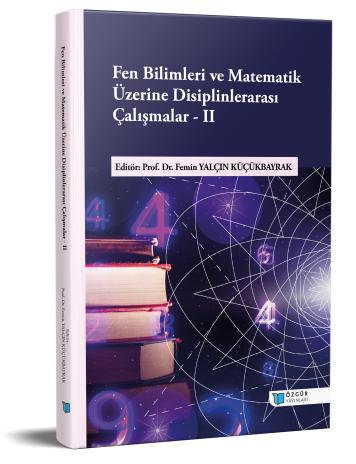
Quantum Computing in Structural Engineering: A Theoretical Framework for Future Applications
Chapter from the book:
Yalçın Küçükbayrak,
F.
(ed.)
2026.
Interdisciplinary Studies on Science and Mathematics - II.
Synopsis
Quantum computing offers a revolutionary way of addressing complex computational problems and has the potential to transform structural engineering. This paper explores the theoretical underpinnings and possible future roles of quantum algorithms—particularly Grover’s algorithm(Grover, 1996), the Variational Quantum Eigensolver (VQE) (Peruzzo et al., 2014), and the Quantum Approximate Optimization Algorithm (QAOA) (Farhi, Goldstone & Gutmann, 2014) —in overcoming limitations associated with classical structural analysis and design methods. We present a conceptual framework for integrating quantum computing into finite element analysis and optimization workflows, outline key technical challenges including data encoding and hybrid architectures, and highlight promising directions for research. This work is intended to provide a foundation for future practical implementations of quantum-enhanced structural design.
How to cite this book
License

This work is licensed under a Creative Commons Attribution-NonCommercial 4.0 International License.
Published
DOI
Categories
Copyright (c) 2026 Fatma İşcan; Femin Yalçın Küçükbayrak; Filiz Kolcu