
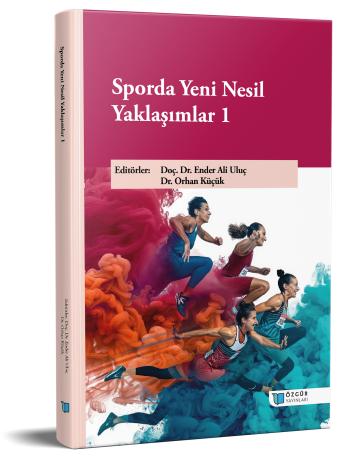
Psychological Resilience and Performance in Athletes
Chapter from the book:
Uluç,
E.
A.
&
Küçük,
O.
(eds.)
2026.
New Generation Approaches in Sport 1.
Synopsis
The sports environment creates intense psychological burdens on athletes due to high competition, performance pressure, and the constant need for improvement; in this context, psychological resilience is considered a critical variable for the sustainability of sports performance. Psychological resilience is defined as an individual's capacity to adapt to stressful and challenging situations and emerge from these processes stronger. In the context of sports, it enables athletes to remain resilient in the face of performance pressure, failure, and the challenges of a competitive environment. Research shows that highly resilient athletes view stressful situations as opportunities for growth rather than threats, thereby maintaining their motivation and focus and recovering more quickly after failure. Individual factors such as self-confidence, motivation, and problem-solving skills, as well as environmental factors such as social support and coach behavior, are among the elements that shape resilience. Furthermore, the concept of mental resilience stands out as an important psychological trait that explains athletes' ability to maintain focus and motivation under pressure. High psychological resilience not only contributes to the consistent maintenance of performance but also to the preservation of athletes' psychological well-being. For this reason, mental training, goal setting, cognitive restructuring, and mindfulness techniques aimed at developing resilience in the field of sports psychology strengthen athletes' ability to cope with stress and make their performance sustainable in the long term.
How to cite this book
License

This work is licensed under a Creative Commons Attribution-NonCommercial 4.0 International License.
Published
DOI
Categories
Copyright (c) 2026 Ender Ali Uluç- Orhan Küçük; Yakup Yiğit- Adem Karatut- Taner Yılmaz- Zeynep Dikbaş- Yusuf Tekin- Ferhat Aktaş- Erdal Demir- Ali Fatih Sağlam- Emrah Barkın