
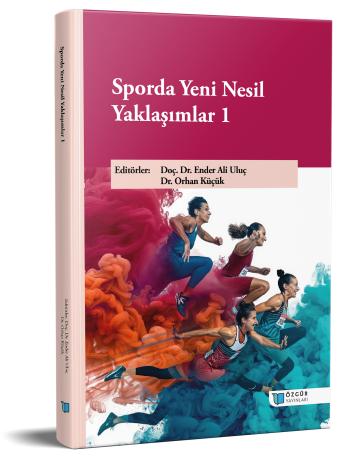
Multidimensional Determinants of E-Sports Performance: Cognitive Mechanisms, Physical Activity, and Health-Related Lifestyle Factors
Chapter from the book:
Uluç,
E.
A.
&
Küçük,
O.
(eds.)
2026.
New Generation Approaches in Sport 1.
Synopsis
Esports has become a competitive and organized performance field together with the process of digitalization and has attracted attention as a sport branch in which cognitive skills are intensively used. The aim of this chapter is to examine the cognitive processes affecting esports performance and the health and lifestyle factors related to these processes from a holistic perspective. Findings in the literature indicate that esports performance cannot be explained only by technical in-game skills; cognitive mechanisms such as attention control, working memory, decision making, and visuospatial processing constitute the fundamental components of performance. In addition, lifestyle factors such as exercise, sedentary behavior, stress level, sleep, and nutrition may have important effects on cognitive efficiency and the sustainability of performance. Existing studies show that regular physical activity may support cognitive performance; however, the physical activity levels of esports players do not always reach the recommended levels. Furthermore, long-term screen use and sedentary behaviors may be associated with various health risks. In general, the literature shows that esports performance has a multidimensional structure shaped by the interaction of cognitive, psychological, and physiological processes as well as lifestyle factors. Therefore, rather than focusing only on in-game skills when evaluating esports performance, it is important to develop holistic approaches that consider cognitive capacity together with health-related lifestyle variables.
How to cite this book
License

This work is licensed under a Creative Commons Attribution-NonCommercial 4.0 International License.
Published
DOI
Categories
Copyright (c) 2026 Ender Ali Uluç- Orhan Küçük; Yakup Yiğit- Adem Karatut- Taner Yılmaz- Zeynep Dikbaş- Yusuf Tekin- Ferhat Aktaş- Erdal Demir- Ali Fatih Sağlam- Emrah Barkın