
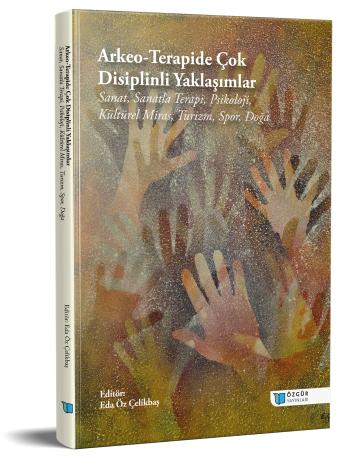
Ancient Cities As Healing Spaces: An Archaeotherapeutic Evaluation Through Nature Walks
Chapter from the book:
Öz Çelikbaş,
E.
(ed.)
2026.
Multidisciplinary Approaches in Archaeotherapy: Art, Psychology, Cultural Heritage, Tourism, Sports, and Nature.
Synopsis
This study aims to examine the contributions of nature walks in ancient cities to mind-body health from an archaeotherapeutic perspective. The study first defines fundamental concepts such as archaeotherapy, nature therapies, and the relationship between cultural heritage and health; then, the biological, psychological, and social impact mechanisms of these practices are discussed in light of existing scientific evidence. The evaluations show that the natural landscape and historical depth offered by ancient cities possess a "double-layered" healing potential in individuals, reducing stress hormones, strengthening the immune system, and alleviating mental fatigue. At the psychological level, it has been determined that these areas restore mental capacity within the framework of Attention Regeneration Theory, reinforcing feelings of belonging and identity, and offering an existential space of meaning. The study also emphasizes that ancient structures such as gymnasiums, stadiums, and baths function as "health and education environments" supporting mind-body integration, and that the defensive topography strengthens the sense of "perceived security," which is critical, especially for post-traumatic recovery. In terms of application, it is argued that ancient heritage sites are not only historical assets that need to be preserved, but also strategic public health resources that can be integrated into health systems through "green prescription" or "social prescribing" models. Consequently, it is demonstrated that archaeotherapeutic interventions that address cultural and natural heritage with a holistic approach offer sustainable, low-cost, and accessible healing pathways for the mental health problems facing modern society.
How to cite this book
License

This work is licensed under a Creative Commons Attribution-NonCommercial 4.0 International License.
Published
DOI
Categories
Copyright (c) 2026 Eda Öz Çelikbaş; Eda Öz Çelikbaş- Asuman Özdemir- Gülten Aldemir- Mustafa Tunç- Özlem Tekin- Yasemin Yalçın