
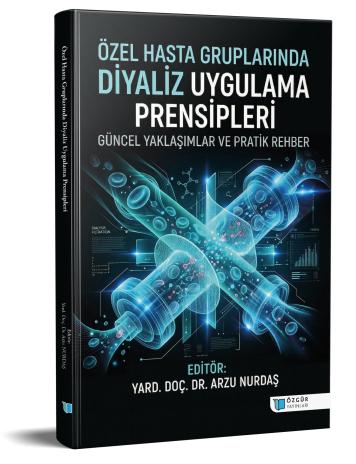
Aging and Dialysis
Chapter from the book:
Nurdaş,
A.
(ed.)
2026.
Dialysis in Special Patient Groups Principles of Practice.
Synopsis
Aging is a multidimensional life stage characterized by physiological, psychosocial, and functional changes, during which the burden of chronic diseases increases significantly. In this context, chronic kidney disease (CKD) has emerged as a major public health concern with a rising prevalence among older adults. Age-related decline in renal function, combined with multimorbidity, frailty, and functional deterioration, contributes to a more complex clinical course of the disease. Although dialysis remains a fundamental treatment for sustaining life in end-stage kidney disease, it should not be considered solely as a process focused on correcting biochemical parameters in older individuals.
This chapter addresses the clinical characteristics of CKD in older adults, the decision-making process for dialysis initiation, and available treatment options from a holistic perspective. It emphasizes that the timing of dialysis initiation should not rely exclusively on glomerular filtration rate, but should instead be based on clinical symptoms, functional status, and patient preferences, highlighting the importance of individualized decision-making. In addition, hemodialysis, peritoneal dialysis, and conservative management approaches are evaluated in terms of quality of life, symptom burden, and ethical considerations.
Nursing care in older dialysis patients emerges as a key component encompassing clinical monitoring, symptom management, prevention of complications, patient education, and psychosocial support. Nursing interventions play a critical role in managing conditions such as intradialytic hypotension, infections, fall risk, and polypharmacy. Furthermore, approaches aimed at improving quality of life, including physical activity, self-management skills, and social support, gain increasing importance.
The management of older dialysis patients requires a multidisciplinary, patient-centered, and individualized care model, in which nursing care plays a pivotal role in ensuring the sustainability of the care process.
How to cite this book
License

This work is licensed under a Creative Commons Attribution-NonCommercial 4.0 International License.
Published
DOI
Categories
Copyright (c) 2026 Arzu Nurdaş; Arzu Nurdaş- Asiye Tan- Sevim Güneş- Hazel Şahin Tarım- Elif Asena Kantarcı- Hazal Atalay