
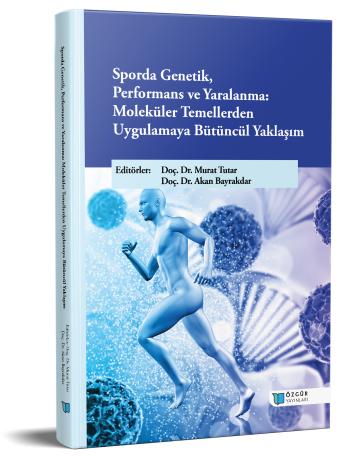
The Effect of Extracellular Matrix and Genetic Regulators on Sports Injuries
Chapter from the book:
Tutar,
M.
&
Bayrakdar,
A.
(eds.)
2026.
Genetics, Performance, and Injury in Sports: A Holistic Approach from Molecular Bases to Application.
Synopsis
Sports injuries have a biological infrastructure complex enough that they cannot be explained solely by mechanical loading and traumatic events. In this context, the extracellular matrix (ECM) is evaluated not merely as a passive structural component, but as an active regulatory system that determines tissue durability, cellular response, and recovery capacity. Particularly in tendon and ligament tissues, collagen organization, proteoglycan balance, and matrix remodeling processes play a critical role in the emergence of injury risk and the preservation of tissue integrity.
In this section, the interaction of ECM organization with genetic and epigenetic regulators is addressed within the context of sports injuries. It is observed that genetic markers such as COL1A1, COL5A1, and the MMP family can modulate inter-individual injury susceptibility by affecting the mechanical properties and remodeling capacity of connective tissue. However, current evidence indicates that this relationship cannot be explained by a single-gene effect; the process must be evaluated as polygenic, multifactorial, and open to environmental stimuli. Mechanotransduction mechanisms, along with microRNA and other epigenetic regulators, stand out as the fundamental molecular axes explaining the relationship between mechanical loading and biological response.
The concurrent evaluation of extracellular matrix biology and genetic regulators contributes to a more accurate understanding of the occurrence, progression, and recovery processes of sports injuries. This approach provides a strong scientific foundation for individualized preventive strategies and goal-oriented rehabilitation models.
Keywords:
How to cite this book
License

This work is licensed under a Creative Commons Attribution-NonCommercial 4.0 International License.
Published
DOI
Categories
Copyright (c) 2026 Murat Tutar- Akan Bayrakdar; Sedat Kahya- Murat Tutar- Akan Bayrakdar- Cihad Onur Kurhan- Recep Aydemir