
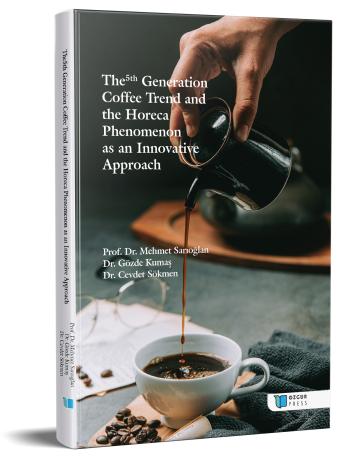
The 5th Generation Coffee Trend And The Horeca Phenomenon As An Innovative Approach
Synopsis
Coffee has been known as a luxury item throughout history. Initially consumed by the wealthy, it remains a beverage enjoyed for pleasure today. Beyond being just a drink, coffee facilitates socialization. While home brewing was popular in some periods, it later evolved into a social element in modern venues using luxury machines. This research examines consumers of hotels, restaurants, and cafes (HoReCa) in Istanbul that embrace the 5th wave coffee movement, identifying potential differences in their preferences based on demographic variables. The findings are interpreted using the Expanded Self Theory. The study concludes that individuals do not view coffee consumption solely as an economic or social factor; rather, disposable income plays a significant role, providing both economic and social benefits. Differences in income levels influence individuals' preferences for 5th wave coffee businesses. Therefore, understanding the factors that determine the role of coffee, a luxury item, on individuals' social identities is crucial. This will allow coffee business owners to develop effective marketing strategies. In recent years, with the rise of experience-oriented consumption, being a consumer of new-generation coffee businesses has become one of the ways individuals define themselves. These consumer expectations play a significant role in the strategies of businesses, enabling them to gain a competitive advantage through differentiation strategies. This research aims to determine the potential differences in consumer preferences for hotels, restaurants, and cafes (HoReCa) in Istanbul that have embraced the 5th wave coffee movement, based on demographic variables. Four hypotheses were developed within the scope of the research. When the differentiation based on gender, age, education level, and income level was examined, it was found that consumer preferences for HoReCa businesses differed only according to income level. This differentiation was found to be between those with an income of 22,000 and below and those with an income between 22,001 and 43,000.
How to cite this book
License

This work is licensed under a Creative Commons Attribution-NonCommercial 4.0 International License.
Published
ISBN
DOI
Statistics
Categories
Copyright (c) 2026 Mehmet Sarıoğlan- Gözde Kumaş- Cevdet Sökmen