
Financial Performance Analysis with Integrated MEREC and EDAS Approaches: The Case of BIST 100
Chapter from the book:
Berberoğlu,
M.
&
Şimşek,
O.
(eds.)
2026.
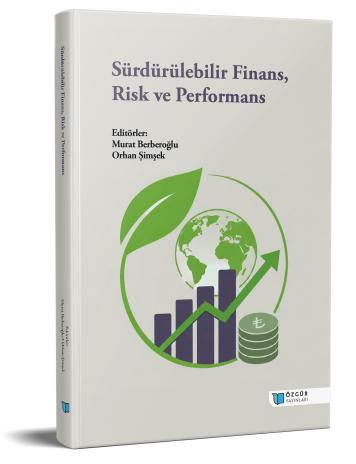
Sustainable Finance, Risk, and Performance.
Synopsis
Financial indicators constitute key criteria for evaluating the financial strength and sustainability of firms. Positive changes and improvements in these indicators suggest that firms utilize their resources more effectively, achieve stronger financial performance, and maintain a favorable position with regard to long-term sustainability. This study aims to determine the financial performance of companies listed on the BIST 100 Index during the 2024–2025 period by using criteria derived from financial indicators that exhibited positive percentage changes. In line with this objective, the financial performances of the companies were evaluated through MEREC and EDAS analyses, which are among the Multi-Criteria Decision-Making (MCDM) methods. The findings of the MEREC analysis indicate that the investment change percentage criterion possesses the highest importance weight and is therefore the most influential criterion in the evaluation process. In contrast, the asset change percentage criterion exhibits the lowest importance weight, indicating the least level of importance among the evaluated criteria. Furthermore, the EDAS analysis demonstrated that TRALT achieved the highest financial performance score and consequently ranked first among the companies examined. Conversely, TABGD obtained the lowest financial performance score and was ranked last in the financial performance assessment.
How to cite this book
License

This work is licensed under a Creative Commons Attribution-NonCommercial 4.0 International License.
Published
DOI
Categories
Copyright (c) 2026 Murat Berberoğlu- Orhan Şimşek; Mehmet Serkan Çalı- Salih Aydın- Uğur Uzun- Murat Berberoğlu- Hasan Ayaydın- Mustafa Uysal- Erhan Daştan- Ceyda Yerdelen Kaygın- Cihan Yılmaz- Adem Ruhan Sönmez- Cengizhan Karaca- Süheyya Alpaslan Bostan- Kübra Saka Ilgın