
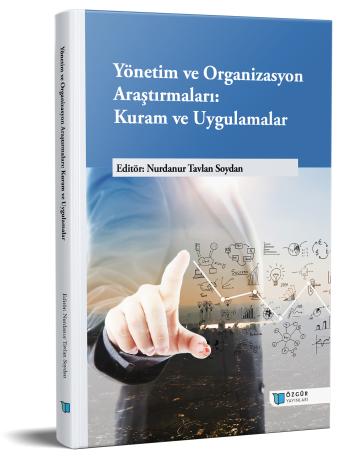
Resistance to Change and Transformation in Quality Management Processes at Universities from a Management 5.0 Perspective: A Conceptual Evaluation
Chapter from the book:
Tavlan Soydan,
N.
(ed.)
2026.
Management and Organization Research: Theory and Practice.
Synopsis
In order for the quality process to be effectively implemented in higher education institutions, it is necessary to adopt a management philosophy that can adapt to changing environmental conditions and support continuous improvement. The Management 5.0 perspective, shaped by the influence of the Industry 5.0 approach, emphasizes the principles of human-centeredness, sustainability, and resilience. The aim of this study is to evaluate resistance to change in the quality process at universities within the framework of the Management 5.0 approach and to identify the necessary elements for the successful completion of the transformation process. A descriptive research method was used in the study, and a literature review was conducted.
The results of the study revealed that quality processes in universities are not merely a matter of technical and administrative regulations; rather, they are shaped by organizational culture, leadership philosophy, and employees’ attitudes and behaviors toward change. Additionally, it was determined that one of the major obstacles to organizational transformation is resistance to change. Resistance to change can stem from various causes, such as the attitude of top management, lack of trust in new practices, communication gaps, reluctance to abandon existing habits, concerns that economic interests will be harmed, and the belief that social bonds will weaken.
In conclusion, for quality processes to be successfully implemented at universities, there is a need for a management approach that encourages employee participation, is based on transparency, and offers employees job security and opportunities for competency development. Furthermore, it is of great importance to view resistance to change not merely as an obstacle, but as a feedback mechanism that contributes to the improvement of the process. It is believed that this approach will contribute to the success of organizational transformation and the establishment of a sustainable quality culture.
How to cite this book
License

This work is licensed under a Creative Commons Attribution-NonCommercial 4.0 International License.
Published
DOI
Categories
Copyright (c) 2026 Nurdanur Tavlan Soydan; Ahmet Sadık Yıldırım- Özüm Eğilmez- Ahu Sezgin- Emrah Köksal Sezgin- Şerife Karagöz- M. Sabri Şirin- Serpil Köse- Mihribar Bilgin- Murat Nazlı- Emine Yılmaz Atik- Muhammet Esat Erdoğan- Rabia Yılmaz