
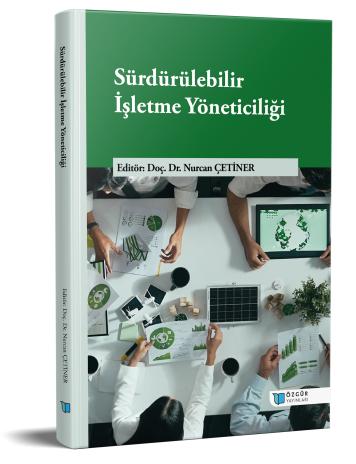
Sustainable Human Resources: Sustainable Career Management
Chapter from the book:
Çetiner,
N.
(ed.)
2026.
Sustainable Business Management .
Synopsis
Aim: Under current conditions, the inadequacy of traditional career management in meeting employee demands has led businesses to seek new approaches. This study aims to explain how "sustainability," one of these new approaches, impacts human resources management (HRM), a crucial part of working life, and how sustainable human resources management affects businesses' competitiveness within the context of "career management."
Importance: In this study, it is important not only to examine sustainable career management as a standalone concept but also to explain it by associating it with elements such as employee development, work-life balance, and emotional management of employees. Additionally, analyzing how businesses create value in the “career management” process through sustainability forms another important aspect of this study.
Method: Within the scope of this study, a literature review was conducted, focusing on how businesses integrate sustainable approaches into career management practices to achieve their strategic sustainability goals.
Problem: The study seeks to answer how a sustainability-focused approach affects the continuity of employees' careers and in which ways this influence changes employees' attitudes and behavior patterns.
Conclusion: As commonly emphasized in the literature, creating sustainable career opportunities within the organization, ensuring employee satisfaction, aligning with corporate goals, and maintaining work-life balance are crucial. It is concluded that human resource management, supported by sustainable career management, will allow businesses to better manage the career development of their workforce and gain a competitive edge.
How to cite this book
License

This work is licensed under a Creative Commons Attribution-NonCommercial 4.0 International License.
Published
DOI
Categories
Copyright (c) 2026 Nurcan Çetiner; Menekşe Ahbab- İlkay Saltık Gür- Deniz Atalay- Sonay Satır- Merve Seda Karcıoğlu- Tuncel Öz- Rana Özyurt Kaptanoğlu