
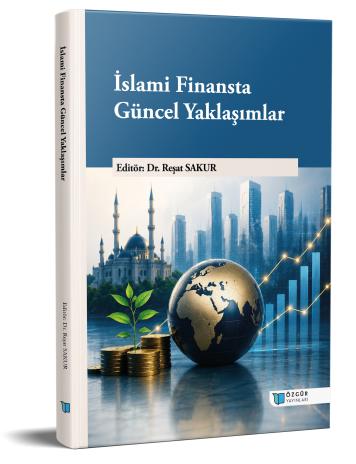
Murabaha Financing in Islamic Banking: Accounting Treatment from an FFMS Perspective
Chapter from the book:
Sakur,
R.
(ed.)
2026.
Current Approaches in Islamic Finance.
Synopsis
This study examines the accounting treatment of murabaha financing, a widely used financing method in participation banking, within the framework of Interest-Free Finance Accounting Standards (FFMS). Murabaha is a cost-plus profit sale contract and serves as a key instrument enabling participation banks to provide asset-based financing linked to real economic activities. The study first discusses the theoretical foundations and operational structure of murabaha financing, followed by a detailed evaluation of accounting principles under FFMS.
The FFMS approach to murabaha transactions is analyzed in terms of asset acquisition, resale to the customer, profit recognition, and periodic income reporting. In this context, critical accounting issues such as the determination of cost, separation of profit margin, and recognition of deferred income arising from credit sales are emphasized. Furthermore, differences between FFMS and Turkish Accounting Standards are comparatively assessed, highlighting potential challenges in practical implementation.
The findings indicate that FFMS provides a more accurate representation of the unique characteristics of murabaha transactions and offers an accounting framework consistent with the principles of interest-free finance. However, the study also concludes that there is a need to eliminate inconsistencies in interpretation and to ensure standardization in accounting practices. Strengthening harmonization efforts will enhance transparency, comparability, and reliability in financial reporting within participation banking.
How to cite this book
License

This work is licensed under a Creative Commons Attribution-NonCommercial 4.0 International License.
Published
DOI
Categories
Copyright (c) 2026 Reşat Sakur; Mehmet Murat Şenol- Habatamu Alebachew Legass- Ömer Keskin- Yaşar Alptürk- Tayfun Yılmaz- Serdar Yaman- Mert Baran Tunçel- Metin Seyhan