
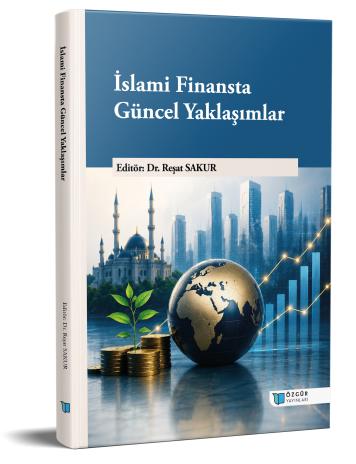
International Financial Integration of Islamic Finance: An Empirical Analysis of Its Interaction with Global Financial Markets
Chapter from the book:
Sakur,
R.
(ed.)
2026.
Current Approaches in Islamic Finance.
Synopsis
The increasing level of integration with global financial markets necessitates a more comprehensive evaluation of the position of Islamic financial markets within the international financial system and their sensitivity to global shocks. In this context, this study examines the integration of Islamic financial markets with global financial markets from a time-frequency perspective. The MSCI World Islamic Index (WII) is employed as a proxy for Islamic finance, while the stock market (MSCI World Index), volatility index (VIX), foreign exchange market (U.S. Dollar Index), oil, gold, and bond market indicators are used to represent global financial markets. In addition, a Global Financial Market Index (GFMI) is constructed from these market indicators using Principal Component Analysis (PCA). The analyses are conducted using monthly data covering the period from June 2002 to May 2026. The study employs descriptive statistics, correlation analysis, ADF and PP unit root tests, fit line analysis, Wavelet Power Spectrum (WPS), Cross-Wavelet Transform (XWT), and Wavelet Transform Coherence (WTC) methods. The findings indicate that Islamic financial markets exhibit a strong and persistent integration with global equity markets. In contrast, the relationships with volatility, exchange rates, and global financial conditions are found to vary across time and frequency domains, becoming particularly stronger during the 2008 Global Financial Crisis and the post-COVID-19 period. The results further reveal that the relationship with the oil market is predominantly positive, whereas the relationships with gold and bond markets are relatively limited and episodic in nature. Overall, the findings suggest that Islamic financial markets are not independent of the global financial system; however, the degree of integration varies depending on the type of market, economic conditions, and investment horizon.
How to cite this book
License

This work is licensed under a Creative Commons Attribution-NonCommercial 4.0 International License.
Published
DOI
Categories
Copyright (c) 2026 Reşat Sakur; Mehmet Murat Şenol- Habatamu Alebachew Legass- Ömer Keskin- Yaşar Alptürk- Tayfun Yılmaz- Serdar Yaman- Mert Baran Tunçel- Metin Seyhan