
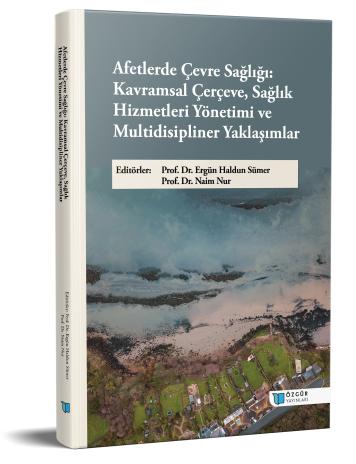
Disaster Preparedness in Family Medicine
Chapter from the book:
Sümer,
E.
H.
&
Nur,
N.
(eds.)
2026.
Environmental Health in Disasters: A Conceptual Framework, Health Services Management, and Multidisciplinary Approaches.
Synopsis
Disasters are extraordinary events of natural, technological, or human-induced origin that exceed a community’s coping capacity and result in substantial losses across physical, social, and health domains. Türkiye’s location within one of the world’s most seismically active zones, combined with the increasing frequency of large-scale disasters in recent years, underscores the urgent need to strengthen the disaster preparedness capacity of the healthcare system.
Vulnerable groups — including elderly individuals, children, pregnant women, patients with chronic illnesses, and those with psychiatric conditions — are disproportionately affected by disasters. Early identification of these individuals and the implementation of priority-based preparedness planning are therefore critical determinants in reducing disaster-related health losses. Furthermore, the heightened risk of communicable diseases, disruption of chronic disease follow-up, and the exacerbation of mental health disorders during disaster periods collectively underscore the imperative for primary healthcare services to maintain full operational capacity in the aftermath of disasters.
Family physicians occupy a critical position across all phases of disaster management, owing to their continuous contact with the community, access to registered population data, and the inherent structure of primary healthcare services. Their responsibilities encompass community profiling and risk assessment, early identification and surveillance of vulnerable populations, delivery of public education and awareness programs, and ensuring continuity of healthcare services throughout the post-disaster recovery phase.
How to cite this book
License

This work is licensed under a Creative Commons Attribution-NonCommercial 4.0 International License.
Published
DOI
Categories
Copyright (c) 2026 Ergün Haldun Sümer- Naim Nur; Serkan Çelikgün- İmran Şahin Düz- Sanem Nemmezi Karaca- Naim Nur- Nagehan Ekici Koşaroğlu- Nurcan Bağlam- İrem Akova- Şahin Yıldırım- İbrahim Furkan Sarkım- Zeynep Sümer- Yaşam Deniz- Nuriye Dinç- Yeltekin Demirel- Emre Sarı- Elif Alıcı Bıyık- Veysel Kenan Çelik- Yusuf Kenan Tekin- İlhan Korkmaz- Gülaçan Tekin- Ergün Sümer- Gülay Yıldırım- Sema Merve Sümer- Ferdağ Yıldırım