
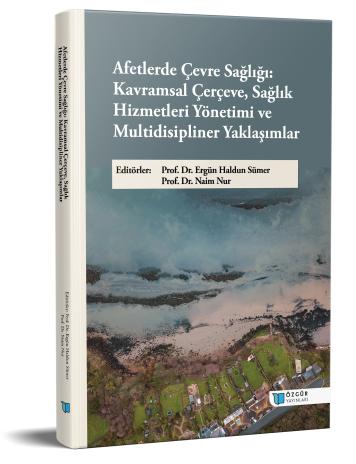
Post-Disaster Epidemic Management
Chapter from the book:
Sümer,
E.
H.
&
Nur,
N.
(eds.)
2026.
Environmental Health in Disasters: A Conceptual Framework, Health Services Management, and Multidisciplinary Approaches.
Synopsis
Disasters pose significant risks for infectious disease outbreaks due to infrastructure damage and inadequate hygiene conditions. Contrary to popular belief, outbreaks do not suddenly erupt immediately after disasters, and there is no scientific evidence that corpses directly increase the risk of infectious diseases. Post-disaster infection development is examined chronologically in three main phases. The first phase, covering days 0-4, is mostly characterized by trauma-related wound infections and tetanus cases. In the second phase, between days 4-30, waterborne, foodborne, and droplet-borne diseases (cholera, typhoid, hepatitis A, norovirus, influenza) emerge due to overcrowding in temporary shelters and lack of access to clean water. In the third phase, after 30 days, vector-borne infections such as malaria and leishmaniasis, as well as diseases with long incubation periods (tuberculosis, etc.), appear. The most important step in managing diseases and potential outbreaks is the immediate establishment of an active disease surveillance and early warning system. Following early detection, essential public health interventions should be implemented. The foundation of these interventions lies in ensuring enough safe, chlorinated drinking water per person, establishing appropriate sanitation areas, and controlling vectors such as rodents and mosquitoes through safe waste disposal. Furthermore, routine childhood vaccinations should continue in the disaster area, with priority given to measles and tetanus vaccinations based on risk assessment. Hand hygiene and isolation measures should be meticulously implemented in crowded camps to prevent respiratory and contact-borne diseases. In conclusion, preventing post-disaster outbreaks depends on the implementation of proactive preparedness plans on the ground and a multi-sectoral approach.
How to cite this book
License

This work is licensed under a Creative Commons Attribution-NonCommercial 4.0 International License.
Published
DOI
Categories
Copyright (c) 2026 Ergün Haldun Sümer- Naim Nur; Serkan Çelikgün- İmran Şahin Düz- Sanem Nemmezi Karaca- Naim Nur- Nagehan Ekici Koşaroğlu- Nurcan Bağlam- İrem Akova- Şahin Yıldırım- İbrahim Furkan Sarkım- Zeynep Sümer- Yaşam Deniz- Nuriye Dinç- Yeltekin Demirel- Emre Sarı- Elif Alıcı Bıyık- Veysel Kenan Çelik- Yusuf Kenan Tekin- İlhan Korkmaz- Gülaçan Tekin- Ergün Sümer- Gülay Yıldırım- Sema Merve Sümer- Ferdağ Yıldırım