
The Role of Family Medicine in Disasters and Emergency Situations
Chapter from the book:
Sümer,
E.
H.
&
Nur,
N.
(eds.)
2026.
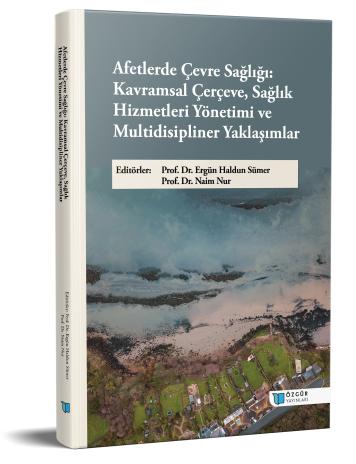
Environmental Health in Disasters: A Conceptual Framework, Health Services Management, and Multidisciplinary Approaches.
Synopsis
Disasters and emergencies represent a full-fledged crisis test for healthcare systems. The capacity for emergency response and the ability to maintain the natural flow of services reflect the preparedness and resilience of healthcare in the face of such events. The need for healthcare services increases during earthquakes, floods, fires, epidemics, mass migrations, or similar situations. The natural flow of services is often disrupted. In this process, family medicine holds a crucial position due to its structure based on a registered population and its approach that evaluates the individual within the context of family, environment, and community.
The role of family medicine in disasters can be better described by the core competencies defined by the World Organization of Family Physicians (WONCA). Primary care management, person-centered care, unique problem-solving, a comprehensive approach, community-oriented care, and holistic assessment enable family physicians to consider not only the patients seeking treatment but also vulnerable groups at risk of not receiving services during disasters. Since pregnant women, infants, children, the elderly, people with disabilities, those with chronic illnesses, and individuals taking regular medication are more susceptible to disasters, prior identification and monitoring of these groups is a fundamental contribution of primary care.
In disaster management, family medicine assumes different responsibilities in each of the preparation, response, and recovery phases. In countries with a high risk of disasters, such as Turkey, the more effective and systematic integration of family medicine into disaster plans is crucial for protecting public health.
How to cite this book
License

This work is licensed under a Creative Commons Attribution-NonCommercial 4.0 International License.
Published
DOI
Categories
Copyright (c) 2026 Ergün Haldun Sümer- Naim Nur; Serkan Çelikgün- İmran Şahin Düz- Sanem Nemmezi Karaca- Naim Nur- Nagehan Ekici Koşaroğlu- Nurcan Bağlam- İrem Akova- Şahin Yıldırım- İbrahim Furkan Sarkım- Zeynep Sümer- Yaşam Deniz- Nuriye Dinç- Yeltekin Demirel- Emre Sarı- Elif Alıcı Bıyık- Veysel Kenan Çelik- Yusuf Kenan Tekin- İlhan Korkmaz- Gülaçan Tekin- Ergün Sümer- Gülay Yıldırım- Sema Merve Sümer- Ferdağ Yıldırım