
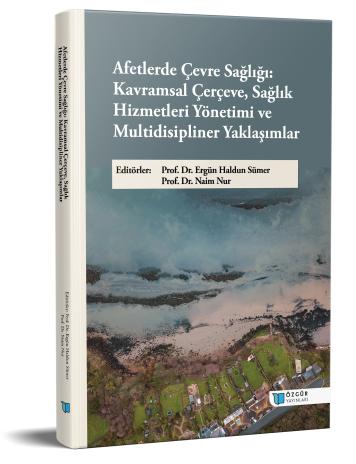
Crush Syndrome: Diagnosis and Current Treatment Strategies
Chapter from the book:
Sümer,
E.
H.
&
Nur,
N.
(eds.)
2026.
Environmental Health in Disasters: A Conceptual Framework, Health Services Management, and Multidisciplinary Approaches.
Synopsis
Crush syndrome is a severe clinical condition resulting from prolonged compression-induced muscle injury, leading to systemic complications. It holds particular importance in disaster medicine, as it is frequently encountered in earthquakes and mass casualty events. This chapter provides a comprehensive overview of the pathophysiology, clinical presentation, diagnostic approach, and current management strategies of crush syndrome. The systemic effects of rhabdomyolysis, including the release of myoglobin and electrolytes, form the basis of life-threatening complications such as acute kidney injury, hyperkalemia, and metabolic acidosis.
Early recognition and appropriate management are key determinants of patient outcomes. Prompt initiation of fluid resuscitation at the scene and effective triage significantly reduce mortality. This chapter also outlines practical treatment algorithms applicable in both prehospital and in-hospital settings, including fluid management, electrolyte monitoring, and renal replacement therapies.
The aim of this chapter is to present up-to-date knowledge on the multidisciplinary management of crush syndrome and to provide a practical guide for healthcare professionals involved in disaster response.
How to cite this book
License

This work is licensed under a Creative Commons Attribution-NonCommercial 4.0 International License.
Published
DOI
Categories
Copyright (c) 2026 Ergün Haldun Sümer- Naim Nur; Serkan Çelikgün- İmran Şahin Düz- Sanem Nemmezi Karaca- Naim Nur- Nagehan Ekici Koşaroğlu- Nurcan Bağlam- İrem Akova- Şahin Yıldırım- İbrahim Furkan Sarkım- Zeynep Sümer- Yaşam Deniz- Nuriye Dinç- Yeltekin Demirel- Emre Sarı- Elif Alıcı Bıyık- Veysel Kenan Çelik- Yusuf Kenan Tekin- İlhan Korkmaz- Gülaçan Tekin- Ergün Sümer- Gülay Yıldırım- Sema Merve Sümer- Ferdağ Yıldırım