
Mapping the Cognitive and Pedagogical Evolution of Digital Versus Print Reading Comprehension: A Bibliometric Science Mapping and LDA Topic Modeling Analysis (1990–2025)
Chapter from the book:
Köroğlu,
M.
(ed.)
2026.
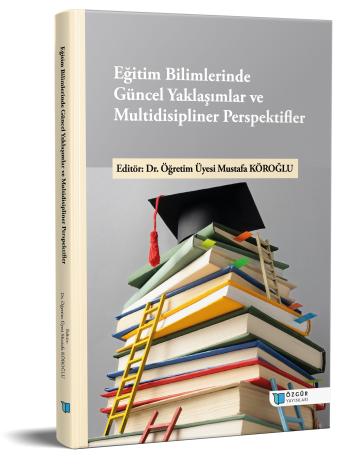
Current Approaches and Multidisciplinary Perspectives in Educational Sciences.
Synopsis
The global acceleration of screen-mediated instruction has transformed the cognitive and pedagogical ontology of literacy. However, contemporary reading research remains theoretically fragmented and heavily bound to Anglo-centric empirical data. To address this systemic insularity, this study executes a methodological triangulation, combining bibliometric science mapping (1990–2025) with unsupervised Latent Dirichlet Allocation (LDA) topic modeling on a refined corpus of 777 core articles from the Web of Science. Network analyses reveal that post-pandemic literacy scholarship has permanently fractured traditional print-centric paradigms. Yet, computational text mining exposes a profound conceptual mechanization: the global discourse is overwhelmingly driven by an administrative efficiency lens prioritizing standardized performance metrics (PISA/PIRLS), while structurally marginalizing fundamental psycholinguistic and orthographic variables. Geopolitically, the spatial mapping unveils a severe collaborative paradox, where highly productive non-Western research hubs characterized by transparent orthographies (e.g., Türkiye) operate under absolute international isolation. We argue that this isolation traps the domain in a 'linguistic echo chamber,' structurally failing to test how automated decoding in transparent languages might mitigate screen-based extraneous cognitive load. We conclude that future theoretical models and national language policies must decolonize digital literacy frameworks, cross-pollinating unique local morphological architectures with universal cognitive scaffolding.
How to cite this book
License

This work is licensed under a Creative Commons Attribution-NonCommercial 4.0 International License.
Published
DOI
Categories
Copyright (c) 2026 Mustafa Köroğlu; Habib Hamurcu- Kemal Doymuş- Fatih Sezek- Mehmet Şam- Ethem Gürhan- Fikret Gülaçtı- Mustafa Köroğlu- Yasin Demirci