
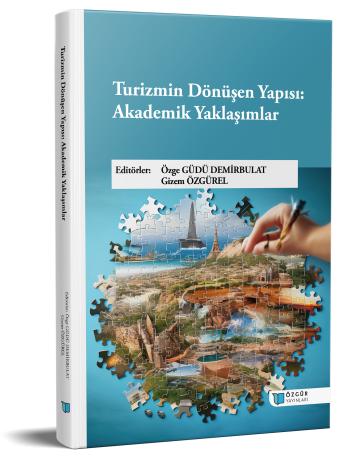
Sharing Economy and Cultural Heritage
Chapter from the book:
Güdü Demirbulat,
Ö.
&
Özgürel,
G.
(eds.)
2026.
The Changing Structure of Tourism: Academic Approaches.
Synopsis
This chapter examines the relationship between the sharing economy and cultural heritage tourism. First, the emergence of the sharing economy, its fundamental characteristics, and its applications in the tourism sector are explained; then, the concept of cultural heritage, the scope of cultural heritage tourism, and UNESCO's efforts to protect cultural heritage are evaluated. The chapter clarifies the tangible and intangible elements of cultural heritage, emphasizing the importance of preserving these values through tourism and transmitting them to future generations. Furthermore, the relationship between sharing economy platforms such as Airbnb, VRBO, and Couchsurfing and cultural heritage tourism is examined, noting that these platforms offer tourists the opportunity to experience local culture. The economic, social, and cultural contributions of the sharing economy to cultural heritage tourism are assessed in terms of generating income for local people, increasing cultural interaction, and strengthening the visibility of heritage values. However, risks such as overtourism, cultural commercialization, loss of authenticity, security issues, and legal uncertainties are also addressed. In conclusion, it is emphasized that the sharing economy offers significant opportunities for cultural heritage tourism, but effective planning, monitoring, and conservation policies are necessary for the sustainable utilization of these opportunities.
How to cite this book
License

This work is licensed under a Creative Commons Attribution-NonCommercial 4.0 International License.
Published
DOI
Categories
Copyright (c) 2026 Özge Güdü Demirbulat- Gizem Özgürel; Ümit Karadağ- Levent Karadağ- Çağnur Çörekli- Setenay Melek Yurttabir- Hasret Ulusoy Mutlu- Muhammed Nurullah Evliyaoğlu- Vildan Tüysüz- Serkan Semint- Serap Ok- Esra Cesur- Özge Alkan