
Crises between Lithuania and the Belarus-Russia alliance
Chapter from the book:
Kılınç Pala,
P.
B.
(ed.)
2026.
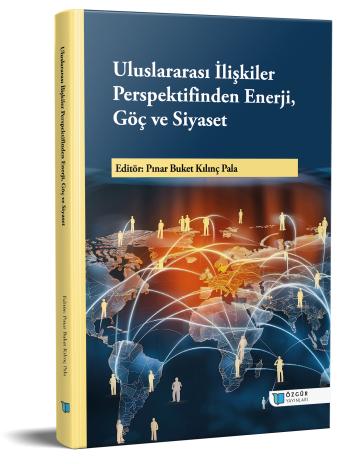
Energy, Migration And Politics From An International Relations Perspective.
Synopsis
The qualitative study deals with the tensions and crises between Lithuania and the Russia-Belarus duo. It explores the possibility that Lithuania could potentially be the first target in the event of a Russian operation in the Baltic region. The objective of the study is to demonstrate the importance of Lithuania in the defence of the Baltic region. It predominantly examines the period from the start of the Ukraine-Russia War to the present day. Documents relating to the statements of Lithuanian, Western and Russian leaders were examined to obtain findings as the statements made by the leaders and officials are crucial for identifying clues regarding the course of events. For this reason, a document review was conducted to gather data on the subject. Within this framework, the explanatory/descriptive case study method was employed. The research concludes that, for a variety of reasons, Lithuania will be the first target of the Russian aggression in the Baltic region. It seeks to elaborate in as much detail as possible on the factors underpinning this conclusion. The first of these factors is Lithuania’s border with Belarus, which is 680 kilometres long and leaves Lithuania vulnerable to initiatives by the Belarus-Russia duo. The second factor concerns Kaliningrad. It has long been known that Russia is uncomfortable with Lithuania controlling access to the Kaliningrad region. The third factor is the bold and pro-independence rhetoric of Lithuanian state officials. In a sense, the Lithuanian leaders are setting an example for the leaders of the other Baltic states through their rhetoric. Therefore, breaking this resistance could be one of Russia’s primary objectives. The fourth factor is Lithuania’s population, which plays a significant role in the formation of a notable military force. When considering the populations of the Baltic states, it is evident that Lithuania has the largest population. It seems reasonable to suggest that this situation affords Lithuania the opportunity to establish a more substantial military force compared to the other Baltic states. Additionally, the Suwałki Gap can be seen as another reason for Russian aggression.
How to cite this book
License

This work is licensed under a Creative Commons Attribution-NonCommercial 4.0 International License.
Published
DOI
Categories
Copyright (c) 2026 Pınar Buket Kılınç Pala; Mehmet Nur Çelikaslan- Muharrem Koz- Engin Selçuk- Fatih Demircioğlu- Vildan Meydan- Serkan Kırkeser