
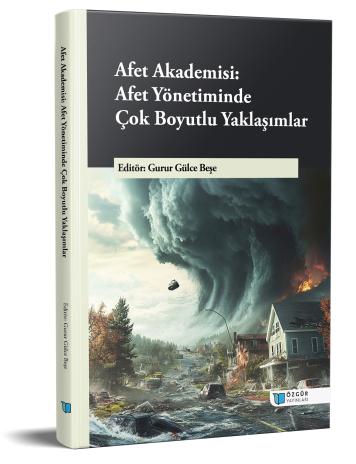
Disaster Management for Persons With Disabilities
Chapter from the book:
Beşe,
G.
G.
(ed.)
2026.
Disaster Academy: Multidimensional Approaches to Disaster Management.
Synopsis
The subject of this study is the accessibility, communication, evacuation, and continuity-of-care challenges experienced by persons with disabilities during the preparedness, response, and recovery phases of disaster management. The aim of the study is to identify the multidimensional effects of disasters on persons with disabilities, evaluate shortcomings in existing planning and practices, and develop applicable recommendations for inclusive disaster management. Accordingly, the study was structured as a narrative review of current national and international literature and addressed four interrelated themes: the participation of persons with disabilities in disaster preparedness, accessible risk communication, the complex care needs of technology-dependent individuals, and interinstitutional collaboration. The reviewed studies indicate that persons with disabilities do not benefit sufficiently from disaster education and emergency planning, while inaccessible warning systems, built environments, and shelters hinder evacuation and access to essential services. For technology-dependent individuals, interruptions in electricity, medical devices, medication, and professional care create additional risks. Therefore, persons with disabilities should not be regarded solely as individuals in need of protection; they should be recognized as active stakeholders who contribute their knowledge and lived experience to planning and decision-making. Accessible communication, individualized emergency plans, inclusive drills, backup power and care arrangements, and collaboration among public institutions, the private sector, and civil society are essential for strengthening overall societal resilience.
How to cite this book
License

This work is licensed under a Creative Commons Attribution-NonCommercial 4.0 International License.
Published
DOI
Categories
Copyright (c) 2026 Gurur Gülce Beşe; Fırat Semih Avşar- Mahmut Said Çam- Ümit Topcuoğlu- Gurur Gülce Beşe- Şerafettin Okan Yayla- Tuba Işık- Serinay Altundağ- Yiğit Aydın Şahin- Şeyma Tosun- Yasin Hasgül- Arzu Güneş- Çilem Bakar Aynacı