
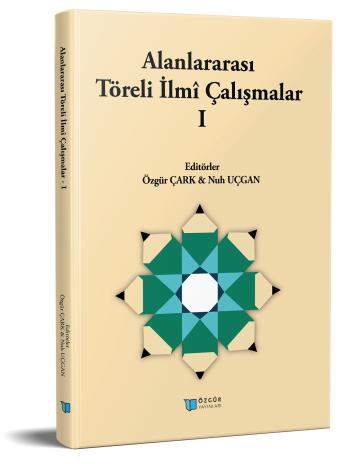
The Influence of Short Translations of Surahs on Traditional Language
Chapter from the book:
Çark,
Ö.
&
Uçgan,
N.
(eds.)
2025.
Interdisciplinary Töreli Scientific Studies I.
Synopsis
Töre constitutes a comprehensive system of values encompassing a nation’s mode of life, including both its material and spiritual dimensions. A nation’s language, religion, traditions and customs, as well as its artistic productions, represent the principal components of töre. In essence, töre signifies adherence to the righteous and upright path, that is, the sirat al-mustaqim. Nations form and refine their languages and systems of töre over centuries through continuous practice and transmission. When a nation advances and attains a high level of development, its language correspondingly evolves in a manner consistent with that level. Since human cognition and thought are only possible through language, the intellectual life of nations that fail to elevate their language to an advanced level remains constrained, limited, and insular. In this regard, töre and language are inseparable phenomena; they evolve and transform in tandem.
The Turkish language, much like a river flowing across centuries, has absorbed elements from every cultural landscape it has traversed. An examination of the historical trajectory of Turkish reveals that it has been influenced by the cultures with which it interacted, incorporated new concepts into its lexical repertoire, and thereby contributed to the formation of an ancient and enduring töre. A thorough understanding of this process constitutes a fundamental cornerstone in the construction of our future. A nation’s töre is most clearly discerned through the works it has produced throughout history. From this perspective, it is essential to examine with scholarly rigor the phase of Turkish that was reconstructed in Anatolia, namely Old Anatolian Turkish. During the Old Anatolian Turkish period, language emerges as the most accurate mirror reflecting the collective consciousness of the people.
Within this historical process, it is of particular importance to comprehend the language employed by the intellectuals who produced translations of short Qur’anic surahs, as these works played a significant role in the development and enrichment of Turkish. The continuity of a nation’s existence depends upon future generations’ ability to understand both the guiding principles of töre and the language shaped by it. Accordingly, this study aims to analyze the concept of language and the period of Old Anatolian Turkish as a linguistic and cultural legacy, drawing upon translations of short surahs as its primary corpus.
Keywords:
How to cite this book
License

This work is licensed under a Creative Commons Attribution-NonCommercial 4.0 International License.
Published
DOI
Categories
Copyright (c) 2025 Özgür Çark, Nuh Uçgan