
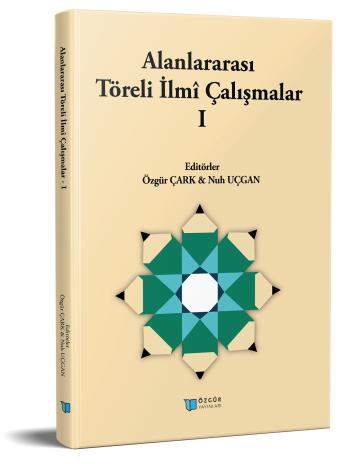
A Critique of Western Interpretations of Sadık Rıfat's Social Views Based on Morality and Justice
Chapter from the book:
Çark,
Ö.
&
Uçgan,
N.
(eds.)
2025.
Interdisciplinary Töreli Scientific Studies I.
Synopsis
Sadık Rıfat Pasha (1807-1857) served as a minister and president of the council in the decision-making and executive bodies of the government during the first half of the 19th century, a period when Europe was shaken by the revolutions triggered by the French Revolution of 1789, the Industrial Revolution displaced socio-economic and political structures that had existed for millennia, and directly affected the Ottoman Empire. During his high-level duties, in his writings and numerous reports on a wide range of subjects from education and economics to civil administration, Islamic ethics, diplomacy, and bureaucracy, he foresaw that the success of reforms, modern renewal and development programs, and the survival of the state could only be achieved through the absolute dominance of moral principles and justice in governance, and by winning the hearts of the people. In his writings penned before the Tanzimat Edict, Sadık Rıfat expressed views on human rights, including the security of life, property, and honor/dignity for all, regardless of whether they were Muslim or non-Muslim, or of ethnicity, as well as on a just administration. Since these views were among the fundamental principles of the Tanzimat Edict, he is generally considered a theorist of the Tanzimat. However, he became virtually an opponent of the Tanzimat when Mustafa Reşid Pasha exploited it for his lust for power and in line with British interests. Although Sadık Rıfat based his views on concepts such as justice and human rights, and moral principles emphasized by Turkish-Islamic thinkers for centuries, without directly referencing any Western ideology, his similarities to slogans in contemporary Europe have led many writers and academics, particularly Şerif Mardin, to interpret his views as being inspired by Western ideologies such as liberalism. This study discusses how Sadık Rıfat, although he depicts the advanced state of the West, relates his views on economic development and governance to the Islamic-Turkish thought that centers on morality and justice—values fundamental to the dignity and well-being of humanity throughout history.
Keywords:
How to cite this book
License

This work is licensed under a Creative Commons Attribution-NonCommercial 4.0 International License.
Published
DOI
Categories
Copyright (c) 2025 Özgür Çark, Nuh Uçgan