
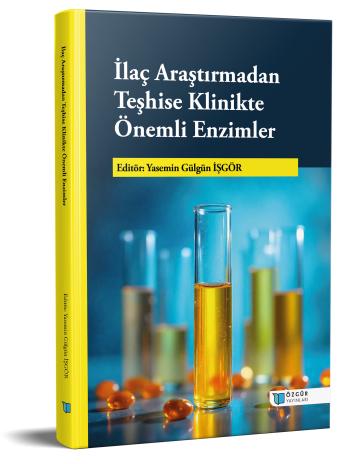
Glutathione Transferases as Novel Markers for Kidney Damages
Chapter from the book:
İşgör,
Y.
G.
(ed.)
2025.
Clinically Important Enzymes from Drug Research to Diagnosis.
Synopsis
One of the most important mechanisms in human metabolism is specialized to maintain ionic and water balance. This balance occurs in every tissue and cell, either by excreting or reabsorbing excess ions and water, and the kidneys are at the center of this balance. They are critical organs not only for water and electrolyte balance but also for maintaining acid-base balance and thus metabolic pH. Furthermore, they are responsible for the elimination of toxic nitrogenous compounds and ammonium released from nucleotide and protein breakdown. Chemicals found in metabolism, whether through exposure or therapeutic use, are also eliminated from the body through the kidneys after detoxification in the liver. Therefore, the kidneys are central organs in maintaining balance for specific molecules and ions, while also removing waste and toxins from the body. This critical role of the kidneys is disrupted by tissue damage or infection. Such a situation is known to affect other tissues and organs, leading to more serious illness. While numerous direct and indirect markers, such as enzymes, ions, and proteins, monitor metabolic health, current research has identified clear markers that can detect kidney damage early, especially before the disease worsens. This leads to early diagnosis and the development of new medications and treatment approaches. In this context, alpha (α) and pi (β) isozymes, members of the glutathione enzyme family, are emerging as significant markers.
How to cite this book
License

This work is licensed under a Creative Commons Attribution-NonCommercial 4.0 International License.
Published
DOI
Categories
Copyright (c) 2025 Yasemin Gülgün İşgör; Yasemin Gülgün İşgör- Özlem Doğan- Yeliz Vergi- Zeynep Tekbaş- Duygu Öcal- Gül Eda Kılınç- Berna Alkan- Belgin İşgör