
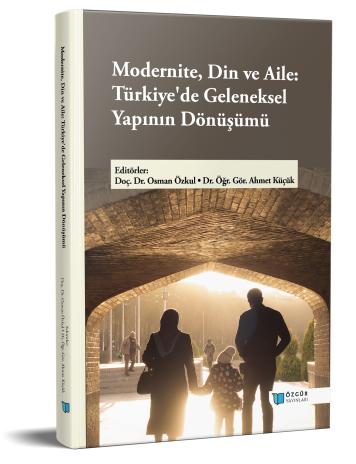
Neoliberal Policies and the Turkish Family Structure: Impacts and Changes
Chapter from the book:
Özkul,
O.
&
Küçük,
A.
(eds.)
2025.
Modernity, Religion, and Family: The Transformation of Traditional Structure in Türkiye.
Synopsis
This section examines the impact of Turkey's neoliberal transformation during the 1980s on family structures. The profound effects of neoliberal policies on family dynamics, societal values, and community structures are particularly observable during periods of economic transformation. While traditional Turkish family structures were characterized by strong intergenerational bonds and distinct gender roles, these dynamics underwent significant change as a result of neoliberal policies. Families assumed greater responsibility for providing sources of social protection amid economic insecurity, which consequently increased the care burden on women. The study analyzes the core tenets of neoliberalism to explore how Turkey's economic reforms shaped transformations in familial relations. Trends such as the reduction in household size, rising divorce rates, and the proliferation of individualistic consumption culture are presented as indicators of this transformation. Furthermore, the state's withdrawal from social services weakened families' mechanisms for providing social support and altered power dynamics within the household. In conclusion, the impact of neoliberalism on family structures extended beyond purely economic factors, precipitating significant changes at societal and cultural levels. This transformation reshaped how families provide social solidarity and support, thereby creating pronounced inequalities among different socioeconomic groups.
How to cite this book
License

This work is licensed under a Creative Commons Attribution-NonCommercial 4.0 International License.
Published
DOI
Categories
Copyright (c) 2025 Osman Özkul- Ahmet Küçük; Osman Özkul- Fatma Göl- Nurenda Coşkun- Yasemin Yaşar- Abdullah Adıgüzel- İlhan Karaca- Zeynep Toprak- Fatih Aydın- Ahmet Küçük- İbrahim Kaygusuz- Hakkı Kalaycı- İshak Torun