
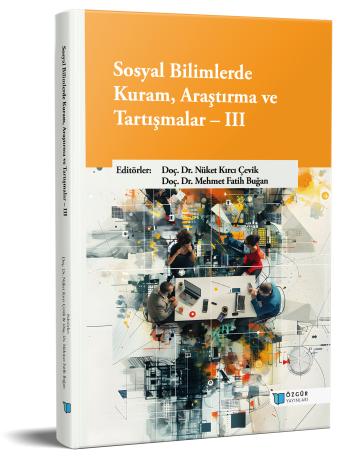
Reassessing Isaiah Berlin’s Two Concepts of Liberty: Liberty and the Shadow of Totalitarianism
Chapter from the book:
Kırcı Çevik,
N.
&
Buğan,
M.
F.
(eds.)
2025.
Theory, Research and Debates in Social Sciences - 3.
Synopsis
Isaiah Berlin's classic lecture, “Two Concepts of Liberty,” remains one of the fundamental reference points in modern political philosophy discussions on freedom. In this work, Berlin divides freedom into two analytical categories: Negative freedom means that the individual has a space protected from arbitrary interference by others; positive freedom is based on the idea that the individual can establish rational self-governance over their own life, in other words, self-realization. While negative freedom guarantees individual plurality and political limitation, positive freedom harbors a dangerous potential in light of historical experiences. The concept of positive freedom divides the individual into a “real” and an “illusory” self. This division can enable political powers to legitimize coercive and oppressive practices under the pretext of knowing the individual's rational interests. However, this section argues that Berlin's strong criticism of positive freedom needs to be reevaluated. Charles Taylor argues that negative liberty also overlooks internal fears and internalized forms of domination that limit individual freedom by focusing solely on external constraints. Gerald MacCallum rejects the distinction between negative and positive liberty, arguing that liberty should be understood as a single relational structure consisting of a subject, an obstacle, and a goal. The chapter also examines John Christman's “content-neutral” positive liberty approach, which focuses on whether desires arise autonomously and without coercion rather than on their rational content. Consequently, it is argued that the authoritarian danger Berlin pointed to stems not from the idea of positive freedom itself, but from the social and political structures that interpret it dogmatically and totalitarian. In this context, positive freedom can still be considered a legitimate and constructive normative ideal for contemporary societies centered on individual development.
How to cite this book
License

This work is licensed under a Creative Commons Attribution-NonCommercial 4.0 International License.
Published
DOI
Categories
Copyright (c) 2025 Nüket Kırcı Çevik- Mehmet Fatih Buğan; Zafer Gündüz- Tarık Tazegül- Özgür Bozan- Özgür Arsu- Kanıkey Kaliyeva- Baktıbek İsakov- Roza Abdykulova- Cıldız Çimanova- Ebubekir Işık- Birol Altun- Aslı Kavurmacı- Hüseyin Çaldak- Nisa Ekşili- Pınar Çelik Çaylak