
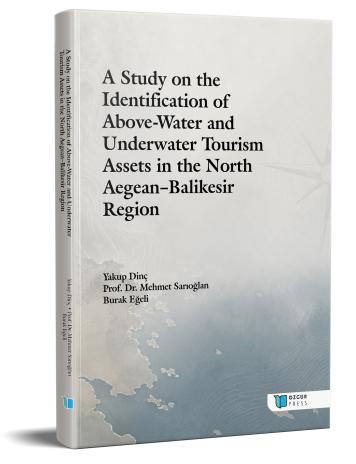
A Study on the Identification of Above-Water and Underwater Tourism Assets in the North Aegean–Balıkesir Region
İndir
Özet
The tourism sector today represents not only an economic field of activity but also a strategic domain in terms of preserving, promoting, and sustainably transferring natural, cultural, and social values to future generations. In particular, coastal and marine tourism has emerged as one of the prominent areas that enhance the competitiveness of destinations through their natural and cultural heritage assets. In this context, above-water and underwater tourism resources have gained increasing importance with the development of alternative tourism approaches.
Located within the North Aegean Region, Balıkesir possesses significant potential for marine tourism with its coastal structure, natural beauty, biodiversity, underwater ecosystems, and cultural heritage. However, the evaluation, preservation, and scientific support of this potential within the framework of sustainable tourism principles are of great importance.
This study addresses the above-water and underwater tourism assets of Balıkesir from a multidimensional perspective and presents significant findings regarding the tourism potential of the region. The study not only identifies the existing tourism assets but also comprehensively evaluates individuals’ levels of awareness, perceptions, experiential tendencies, and sustainable conservation approaches towards these values. In this respect, the work serves as an important academic resource for researchers working in the fields of marine tourism, diving tourism, destination attractiveness, and sustainable tourism, while also providing guidance for local authorities, destination managers, and tourism sector stakeholders.
It is believed that this study will make significant contributions to the preservation and transmission of Balıkesir’s natural and cultural marine heritage to future generations, the development of alternative forms of tourism, and the enhancement of the region’s visibility on an international scale.
As the researchers who contributed to this valuable study, we hope that this work will provide meaningful contributions to the academic literature and the tourism sector.
Anahtar Kelimeler:
Kaynakça Gösterimi
Lisans

Bu çalışma Creative Commons Attribution-NonCommercial 4.0 International License ile lisanslanmıştır.
Yayın Tarihi
ISBN
DOI
İstatistikler
Kategoriler
Telif Hakkı (c) 2026 Mehmet Sarıoğlan- Yakup Dinç- Burak Egeli