
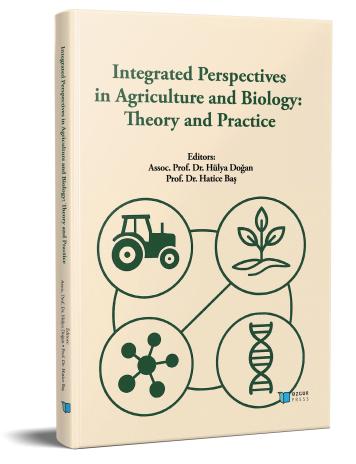
Problems and Advanced Techniques in Herd Management Practices in Small Ruminants
Şu kitabın bölümü:
Doğan,
H.
&
Baş,
H.
(eds.)
2025.
Integrated Perspectives in Agriculture and Biology: Theory and Practice.
Özet
Small ruminant farming, particularly through sheep and goat breeds, plays a strategic role in rural development, food security, and sustainable animal production. This production model offers advantages such as biodiversity conservation, low input requirements, adaptability to challenging environmental conditions, and support for economic and ecological sustainability, particularly in mountainous and semi-arid regions. However, multiple structural and technical problems observed in its field negatively impact the sector's productivity and animal welfare. Ineffective utilization of genetic resources, inadequate breeding programs aimed at protecting and improving native breeds, seasonal fluctuations in feed supply, and a lack of quality forage increase production costs and limit animal performance. Furthermore, regional inequalities in health services make early diagnosis and control of diseases difficult, and substandard housing conditions threaten animal welfare and production sustainability. In addition to these problems, limited access to information by breeders, lack of technical training, and climatic variability reduce the sector's adaptive capacity.
Climate change is another critical factor directly impacting small ruminant farming. Rising temperatures, depleting water resources, and pasture degradation threaten both forage production and animal health. In this context, protecting indigenous breeds resilient to environmental stressors and developing climate adaptation strategies are vital for the future of the sector. Significant challenges also exist in terms of marketing and the value chain. Producers struggle to deliver their products directly to the market and earn low incomes in a system dominated by intermediaries. Effective cooperatives, the use of digital marketing tools, and local branding strategies are among the potential solutions that can increase producers' incomes. Finally, digitalization and data-based management systems have the potential to increase productivity in small ruminant farming. Innovative approaches such as animal tracking systems, health and production monitoring through mobile applications, and artificial intelligence-supported decision-making mechanisms both guide breeders and facilitate the production of scientific data. This study aims to develop sustainable and innovative solutions by addressing the current problems of small ruminant farming with a multidimensional approach. Improvements at both the technical and socioeconomic levels will ensure the sector achieves a resilient and competitive structure.
Anahtar Kelimeler:
Kaynakça Gösterimi
Lisans

Bu çalışma Creative Commons Attribution-NonCommercial 4.0 International License ile lisanslanmıştır.
Yayın Tarihi
DOI
Kategoriler
Telif Hakkı (c) 2025 Hülya Doğan- Hatice Baş; Berna Keleş- Emine Sema Çetin- Müjgan Güney- Servet Aras- Gökçe Aydöner Çoban- Halil Erhan Eroğlu- Gülten Keleş- İlayda Zeliha Özdemir- Fatma Zümra Hayarali- Ertuğrul Kul- Orhan Ermetin- Mehmet Akif Boz- Deniz Can Demir- Duygu Baki Acar- Hacer Tüfekci- İbrahim Can Temur- Hilal Tozlu Çelik- Şerife Nur Selvi- Şahin Tanrıkulu- Şeyda Savalan- Raziye Işık Kalpar- Murat Ertuğrul- Ümran Şeker Ertuğrul- Zehra Meliha Tengiz- Merve Ayyıldız