
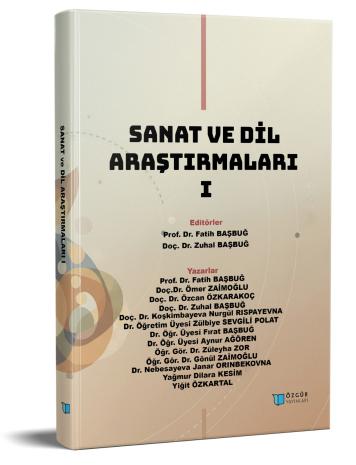
Art and Language Studies I
Synopsis
Art and language, as humanity’s oldest forms of expression, constitute one of the strongest bridges connecting the past and the future. Art and Language Studies I, the volume you hold in your hands, is a comprehensive work that deepens this bridge by bringing together different disciplines and re-establishing cultural memory in dialogue with contemporary understandings of art. With chapters prepared across a wide spectrum—including painting, sculpture, traditional Turkish arts, linguistics, and media studies—the book not only presents a solid academic accumulation but also offers a new perspective on the multilayered structure of cultural identity.
Prepared in dedication to the institution of the family—one of the most sacred institutions of Turkish society—this book coincides with the declaration of 2025 as the “Year of the Family” by the President of the Republic of Türkiye.
One of the central themes of the book is the strong connection between the concept of family and artistic expression in Turkish and Kazakh cultures. Studies examining the artistic representation of family identity in nomadic Kazakh culture reveal how a broad artistic vocabulary—ranging from yurt architecture and animal style to ornamental culture and weaving traditions—is deeply interwoven with family structure, identity, and spiritual values.
Other chapters re-evaluate art within the context of historical periods and social transformations. Academic analyses addressing the reflection of industrial aesthetics in 19th-century European art, Henry Moore’s post-war family-themed works, and the development of the concepts of nationalism and mythology in Turkish painting provide readers with both historical and conceptual perspectives. Studies focusing on the use of color in traditional miniature painting further expand the interpretive framework of art by examining the relationship between artistic techniques and cultural ideologies.
The book also addresses issues of media and representation in the modern era, analyzing how the institution of the family is reshaped today at political, social, and discursive levels.
Each chapter offers in-depth analyses specific to its field while simultaneously contributing to the overarching theme of cultural continuity that defines the book as a whole.
It is my hope that this work will contribute to a deeper understanding of the multifaceted nature of art, support the preservation of cultural heritage within academic and artistic contexts, and foster the emergence of new grounds for discussion.
Keywords:
How to cite this book
License

This work is licensed under a Creative Commons Attribution-NonCommercial 4.0 International License.
Published
ISBN
DOI
Statistics
Categories
Copyright (c) 2025 Zuhal Başbuğ- Fatih Başbuğ