
Classification of Hearing Loss
Chapter from the book:
Kandazoğlu Erdem,
M.
&
Erdal,
S.
&
Karabudak,
B.
(eds.)
2025.
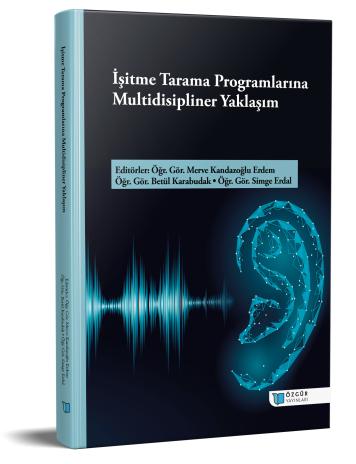
Multidisciplinary Approach to Hearing Screening Programs.
Synopsis
This section addresses hearing loss using a multidimensional classification approach that reflects the complex structure and clinical diversity of the auditory system. The division of hearing loss into conductive, sensorineural, and mixed categories based on its anatomical and physiological foundations facilitates understanding of the pathophysiological processes in the outer ear, tympanic membrane, middle ear, inner ear, and neural structures. In addition, etiological classifications based on developmental stages, such as congenital, perinatal, childhood, and adolescence, help to more accurately identify risk factors and define age-specific follow-up requirements.
Classification systems related to the degree of hearing loss provide diagnostic consistency by expressing audiological thresholds using standard terminology. Configuration patterns defined according to frequency distribution provide important clues about the possible etiological mechanisms underlying hearing loss. The onset time (congenital, early childhood, acquired) and course characteristics (sudden, progressive, fluctuating) play a critical role in determining the individual's follow-up frequency, urgency level, and intervention requirements. Furthermore, specific clinical categories such as auditory neuropathy spectrum disorder, functional hearing loss, and central auditory processing disorder require diagnostic evaluations beyond traditional classification systems.
These multidimensional classification approaches are essential for improving the accuracy and effectiveness of hearing screening programs. Classification systems facilitate assessment and decision-making processes by establishing a common language of communication in hearing evaluation processes, which require multidisciplinary teamwork. Consistent information sharing among different professionals is crucial for planning accurate screening and diagnosis processes and for long-term follow-up. In this respect, classification systems represent a central building block that increases the diagnostic accuracy of hearing loss, supports the effectiveness of screening practices, and forms the basis of a comprehensive multidisciplinary approach.
How to cite this book
License

This work is licensed under a Creative Commons Attribution-NonCommercial 4.0 International License.
Published
DOI
Categories
Copyright (c) 2025 Merve Kandazoğlu Erdem- Simge Erdal- Betül Karabudak; Tuğba Ural- Merve Kandazoğlu Erdem- Simge Erdal- Esra Kuru- Betül Karabudak- Esra Sarlık- Büşra Nehir Şahin