
Assistive Device Technologies in Auditory Rehabilitation
Chapter from the book:
Kandazoğlu Erdem,
M.
&
Erdal,
S.
&
Karabudak,
B.
(eds.)
2025.
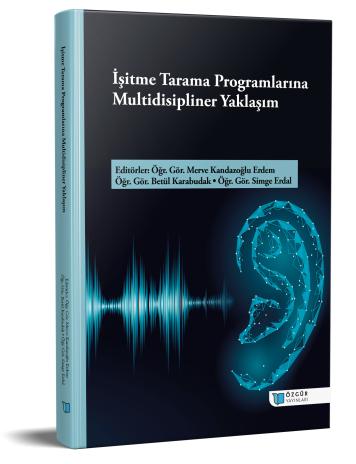
Multidisciplinary Approach to Hearing Screening Programs.
Synopsis
The increasing prevalence of hearing loss has led to greater emphasis on hearing loss and the recognition that hearing plays a significant role in overall well-being at all stages of life (Chadha et al., 2021). It has been shown that early intervention can “restore quality of life by eliminating, reducing, or preventing hearing loss-related deficits in function, activity, participation, and quality of life” (Saunders et al., 2021). Individuals with hearing loss are included in the education system and require rehabilitation programs that include specialized strategies specific to them (Baş & Tozak, 2025). The goal of these auditory rehabilitation programs for individuals with hearing loss is to ensure the understanding of sound messages for communication and to improve auditory skills (Pinzón et al., 2025). However, for individuals with hearing loss to be successful in educational settings, appropriate equipment and devices must be provided. In this context, it is important to use visually rich technologies that support language, speech, and academic skills, which can create an individual learning environment, increase individuals' self-confidence, and positively impact the learning process (Topçu & Cakir, 2025). Assistive or supportive technology is not limited to hearing aids and implants; audiologists have recently begun to use assistive device technologies used in rehabilitation, which are often costly and difficult to access (Pinzón et al., 2025). A study emphasizes the decisive impact of early diagnosis of hearing loss and the effective use of assistive hearing technologies on an individual's language and communication skills during auditory rehabilitation (Baş & Tozak, 2025).
Hearing aids alone are not sufficient in the auditory rehabilitation process; auditory training should also be provided. New technologies should be utilized in personalized auditory training. Assistive device technologies, especially for children, positively impact academic success. This section will discuss the importance and contributions of assistive device technologies used in the auditory rehabilitation processes of individuals with hearing loss.
How to cite this book
License

This work is licensed under a Creative Commons Attribution-NonCommercial 4.0 International License.
Published
DOI
Categories
Copyright (c) 2025 Merve Kandazoğlu Erdem- Simge Erdal- Betül Karabudak; Tuğba Ural- Merve Kandazoğlu Erdem- Simge Erdal- Esra Kuru- Betül Karabudak- Esra Sarlık- Büşra Nehir Şahin