
A Comparative Evaluation of Turkey’s Digital Competitiveness Performance Based on IMD 2024 Data
Chapter from the book:
İnce,
M.
&
Gürsoy,
İ.
(eds.)
2025.
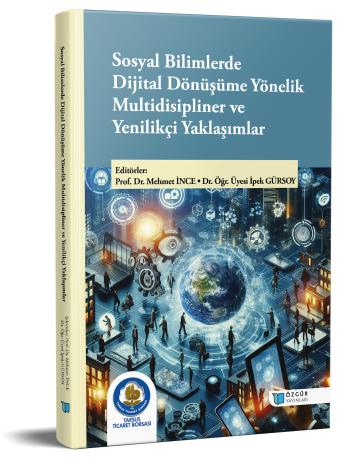
Multidisciplinary and Innovative Approaches to Digital Transformation in Social Sciences.
Synopsis
Digitalization has become one of the most significant transformation dynamics of our era and has been placed at the center of countries’ economic growth, competitiveness, and sustainable development strategies. Digital technologies have profoundly influenced not only production processes but also information flows, the quality of institutional governance, and forms of social interaction. Consequently, digital competitiveness has emerged as a multidimensional concept that measures countries’ capacity to produce, adopt, and transform digital technologies into societal value. Countries with high digital competitiveness are able to transition more rapidly toward knowledge-based economies, enhance their innovation potential, and gain strategic advantages in the global economy.
This study evaluates Turkey’s digital competitiveness performance comparatively with the top ten countries in the IMD 2024 World Digital Competitiveness Index. The aim of the study is to examine Turkey’s current position across the three main pillars that determine the level of digitalization—Knowledge (knowledge creation and transfer), Technology (technological infrastructure and investments), and Future Readiness (capacity to prepare for the future)—and to identify performance gaps between Turkey and digitally advanced economies.
The research methodology is based on IMD 2024 data and adopts a comparative analysis approach. Turkey’s scores for each criterion are compared with the highest and second-highest scores among the top ten countries in the index, and the data are visualized through tables and figures. The analyses are conducted solely on the basis of raw scores.
The findings indicate that Turkey’s digital competitiveness performance lags significantly behind that of advanced economies. Turkey’s overall score is 50.03, which is less than half of the scores achieved by digital leaders such as Singapore (100), Switzerland (93.15), and Denmark (91.99). In the Knowledge criterion, Turkey scores 44.28, revealing a substantial gap when compared to Switzerland (95.9) and Singapore (95.4). This result highlights deficiencies in digital knowledge production, research infrastructure, and digital skills. In the Technology criterion, Turkey ranks last with a score of 44.39, indicating that investments in digital infrastructure, technology transfer, and R&D expenditures remain well below the average of advanced countries. Regarding Future Readiness, Turkey scores 54.41, placing it at a relatively low level compared to Singapore (100) and Denmark (96.72). This finding suggests limited societal adaptation to digital transformation, constrained innovation capacity, and insufficient institutional preparedness.
Overall, these results demonstrate that Turkey requires strategic reforms in its digital transformation process. In particular, strengthening the digital education system, increasing the supply of qualified human capital, balancing digital infrastructure investments at the regional level, and institutionalizing public–private sector cooperation are essential steps to enhance Turkey’s digital competitiveness.
How to cite this book
License

This work is licensed under a Creative Commons Attribution-NonCommercial 4.0 International License.
Published
DOI
Categories
Copyright (c) 2025 Mehmet İnce- İpek Gürsoy; Ali Şükrü Çetinkaya- Zehra Alakoç Burma- Sibel Çevik- M. Sami Süygün- Pelin Albayrak Fakıoğlu- Senay Oğuztimur- Sinan Çavuşoğlu- Kazım Dağ- Sezen Bozyiğit- Gökçer Aydın- Şükran Dertli- Recep Bozkurt- Eyyüp Akyüz- Özlem İlhan- İlknur Hatice Geçim- Zafer Yıldırım- Turgay Yıldırım- Bensu Narin- Ata Kahveci