
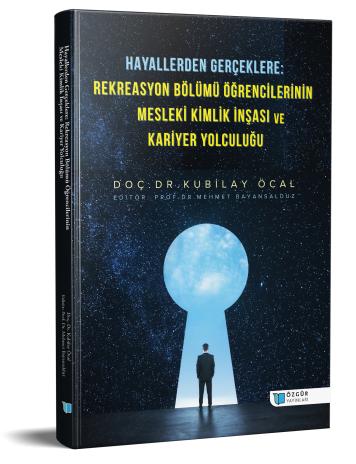
From Dreams to Reality: Professional Identity Formation and Career Journey of Recreation Students
Synopsis
The field of recreation has rapidly evolved into an increasingly diversified and interdisciplinary area of study in response to the changing needs of modern society. However, despite this transformation, the intellectual, emotional, and professional journeys of the young professionals positioned at the very center of this field—namely, students of Recreation departments—have long remained underrepresented in the academic literature. This work aims precisely to make this invisible domain visible by offering an in-depth exploration of students’ processes of identity construction, expectation management, and career orientation, from the moment they first consider entering the department to the threshold of graduation.
The research findings indicate that many students enter the Recreation department not in pursuit of a long-held dream, but rather as the result of a “discovery” process or, at times, coincidental guidance. Far from constraining their professional development, this initial point of entry often opens the door to a dynamic transformation in which students adapt like “chameleons,” construct new identities, carve out their own paths, and reinterpret the concept of recreation through their personal experiences. From this perspective, recreation education represents not merely the transmission of theoretical knowledge but a holistic ecosystem in which a sense of belonging, self-efficacy beliefs, and professional self-concept are shaped and negotiated.
The academic foundation of this book is based on qualitative data collected within the scope of my master’s thesis. The findings derived from content analyses reveal that although students generally possess strong social and creative attributes, they occasionally experience uncertainty when it comes to clearly defining their professional roles and developing a solid, future-oriented career plan. The widening gap between the knowledge acquired in university settings and the fluctuating expectations of the sector points to a critical issue that warrants reconsideration in terms of both educational curricula and practical training opportunities. While critically examining and rendering visible the current state of recreation education, this study also provides important insights into the need for a more practice-oriented, flexible, and sector-aligned structure that responds more effectively to the real needs of students.
As the pages unfold, readers will encounter the stories of young individuals who struggle with the constraints of the system, strive to sustain themselves through personal effort, push their limits with aspirations of becoming entrepreneurs, coaches, or teachers, and at times question why they chose this field in the first place. This book reflects the journeys of these students—each an unfinished project—as they transition from a “student” identity toward that of a “recreation professional.”
I hope this work will not only contribute to the academic field but also offer valuable perspectives to educators, curriculum designers, and students themselves. With the intention of amplifying the voices of these young individuals who will shape the future of the recreation field and of offering even modest support to their career development processes, this book is presented to the reader.
Assoc. Prof. Dr. Kubilay Öcal
How to cite this book
License

This work is licensed under a Creative Commons Attribution-NonCommercial 4.0 International License.
Published
ISBN
DOI
Statistics
Categories
Copyright (c) 2025 Kubilay Öcal; Mehmet Bayansalduz