
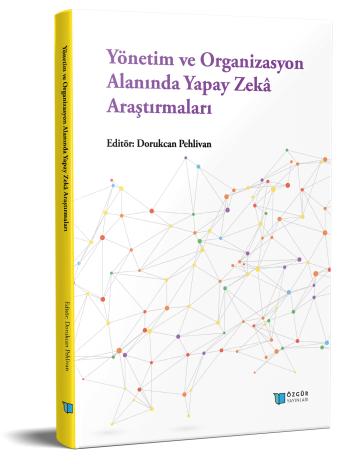
Is Artificial Intelligence a Co-Worker or a Competitor in the Future World of Work?
Chapter from the book:
Pehlivan,
D.
(ed.)
2025.
Artificial Intelligence Research in Management and Organization.
Synopsis
This study examines the impact of Artificial Intelligence (AI) on employee attitudes and behaviors from an organizational behavior perspective and discusses the "double-edged sword" nature of AI technologies. Along with digital transformation, AI has become a strategic tool in organizations for productivity, innovation, and decision-making processes; however, it has also triggered negative psychosocial outcomes among employees. The literature shows that AI saves employees time by taking over routine tasks, encourages autonomy, creative performance, innovative and proactive behaviors, and transforms leadership processes. The fact that anthropomorphic AI assistants strengthen perceptions of trust, belonging, and social support reinforces this positive picture. In contrast, job insecurity and fear of unemployment caused by artificial intelligence, role ambiguity, technological stress, anxiety, withdrawal, loafing, and ethical concerns undermine the organizational climate; they erode employee commitment, citizenship behaviors, and psychological resources. In conclusion, the study emphasizes that artificial intelligence creates both opportunities and threats, and that structuring the integration process within a managerial and ethical framework is critical. In addition, the study offers recommendations to organizations on developing artificial intelligence literacy, adopting human-centered design principles, and creating an atmosphere of open communication and trust. In this context, the study argues that employees can become agents who not only observe change but also determine the direction of transformation.
How to cite this book
License

This work is licensed under a Creative Commons Attribution-NonCommercial 4.0 International License.
Published
DOI
Categories
Copyright (c) 2025 Dorukcan Pehlivan; Mehmet Ali Taş- Seher Yastıoğlu- Tuğba Erhan- Dorukcan Pehlivan