
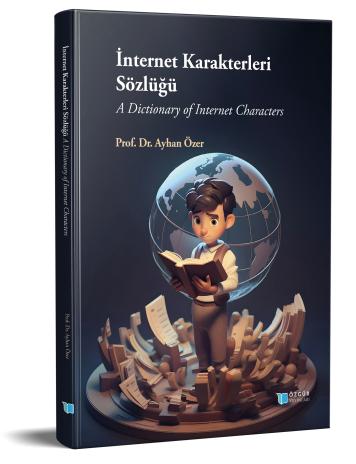
A Dictionary of Internet Characters
Synopsis
The Dictionary of Internet Characters is a typological study that examines a world in which human beings are defined less by how they think than by how they behave in the digital age. Abandoning the classical notion of the dictionary, the book does not aim to explain words but to diagnose the repetitive patterns of behavior produced by digital culture. The “characters” presented here do not represent individual personalities; rather, they are conceptual counterparts of attitudes shaped by the economy of visibility, algorithmic reward systems, and performance pressure.
The study places the transformation of the concept of truth in the digital age at its center. Truth is no longer a stable reference; it has become a form of content that is aesthetically shaped, circulated, and consumed. Within this framework, art is positioned not as a field claiming documentary accuracy, but as a critical and intuitive mode of thought. Each character in the book renders visible, as a systemic diagnosis, phenomena ranging from toxic optimism and algorithmic obedience to emotional capital and digital spirituality.
The visuals produced alongside the text suspend the classical tradition of portraiture; the face turns into an interface, and the body into a carrier of data. Formal decisions are designed as visual equivalents of the conceptual weight they carry. In this respect, the book functions as an ethical and cultural archive that constructs a new iconography of the digital age, records its behavioral repertoire without judging the individual, and seeks to leave today’s digital figures to the cultural memory of the future.
Keywords:
How to cite this book
License

This work is licensed under a Creative Commons Attribution-NonCommercial 4.0 International License.
Published
ISBN
DOI
Statistics
Categories
Copyright (c) 2025 Ayhan Özer; Erdinç Yılmaz