
The Pedagogical Value of Gamified Interventions in Movement Education Programs
Chapter from the book:
Uluç,
E.
A.
&
Özgider,
C.
&
Yıldız,
M.
(eds.)
2025.
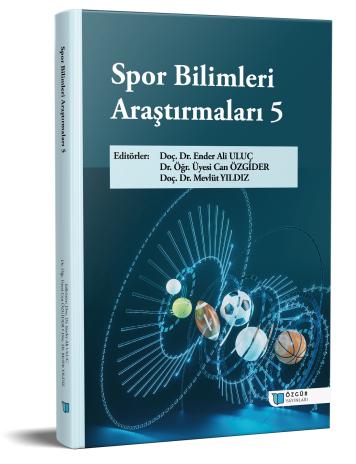
Sports Sciences Research 5.
Synopsis
Movement education is defined as an academic discipline that examines movement patterns that emerge in practice areas, games, and sports, aims to analyze their meanings, and explain their interactions within individuals and groups. This discipline encompasses a comprehensive set of tools and methods encompassing systematic educational processes aimed at developing motor skills. Structured movement education programs in educational institutions and social settings increase children's participation in regular physical activities and support their cognitive, emotional, and social development. Play is a dynamic form of interaction that enables children's active participation in learning processes, allowing them to discover and experience new knowledge. Play-based movement education facilitates the acquisition of fundamental movement skills in children and adolescents, while contributing to the development of motivation, engagement in learning, self-confidence, a sense of responsibility, and social skills. Planned and structured play-based programs support the systematic development of motor skills such as physical competence, coordination, flexibility, strength, speed, and endurance.
Gamified interventions in movement education programs have high pedagogical value. These approaches increase student motivation, engagement, the fulfillment of basic psychological needs, and positive social behaviors, supporting children's physical and psychosocial development in a holistic manner. The study concludes that gamified movement education interventions are an effective pedagogical tool that holistically supports the physical, cognitive, and social development of children and adolescents.
How to cite this book
License

This work is licensed under a Creative Commons Attribution-NonCommercial 4.0 International License.
Published
DOI
Categories
Copyright (c) 2025 Ender Ali Uluç- Can Özgider- Mevlüt Yıldız; Gamze Elif Adiloğulları- Reşat Kartal- Ferhat Aktaş- Deniz Ünver- Günseli Duman- Savaş Duman- Ahmet Şahin- Aysun Yavuz