
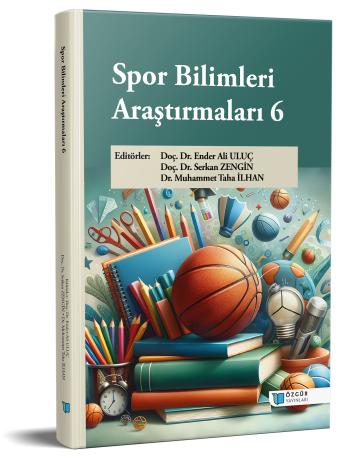
The Role of Anxiety on Sports Performance: An Assessment of Athletes
Chapter from the book:
Uluç,
E.
A.
&
Zengin,
S.
&
İlhan,
M.
T.
(eds.)
2025.
Sports Sciences Research 6.
Synopsis
As is well known, anxiety is directly related to psychological and physiological processes and is a multidimensional phenomenon that shapes an individual's performance capacity. The literature indicates that the cognitive dimension of anxiety limits performance through negative thoughts and anticipation of failure, while the somatic dimension has been shown to reduce athlete effectiveness through heart rate, muscle tension, and autonomic nervous system responses. A review of the literature on the role of anxiety on athletic performance reveals that athletes' gender, sport, and individual characteristics are among the important factors determining the level and effects of anxiety.
In the sports environment, anxiety manifests itself through physiological, psychological, and behavioral indicators. While optimal anxiety functions as a motivational mechanism that supports performance, excessive or persistent anxiety leads to decreased performance and reduced effectiveness in competitive environments.
In conclusion, within the scope of this section, it can be stated that practices such as mindfulness, meditation, cognitive restructuring, and mental training techniques reduce the negative effects of anxiety and increase athletes' performance consistency.
How to cite this book
License

This work is licensed under a Creative Commons Attribution-NonCommercial 4.0 International License.
Published
DOI
Categories
Copyright (c) 2025 Ender Ali Uluç- Serkan Zengin- Muhammet Taha İlhan; Gamze Elif Adiloğulları- Reşat Kartal- Ferhat Aktaş- Deniz Ünver- Ahmet Şahin- Büşra Baykuş- Günseli Duman