
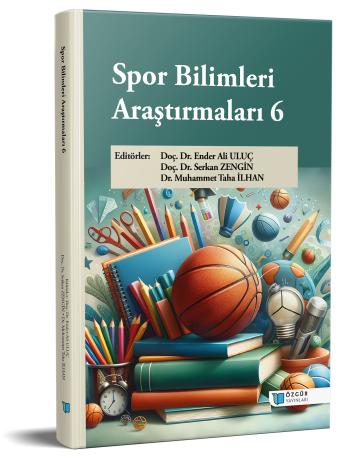
The Unseen Power of Sports Communication: Psychological Interactions in Team Success
Chapter from the book:
Uluç,
E.
A.
&
Zengin,
S.
&
İlhan,
M.
T.
(eds.)
2025.
Sports Sciences Research 6.
Synopsis
Communication is the process of generating and transmitting meaning between individuals or groups. This process involves the transmission of information, feelings, and thoughts to others through verbal and nonverbal signals. With its interactive nature, communication ensures both the coordination of behaviors and the continuity of social relationships. Sports communication refers to the interactive processes that occur between stakeholders such as athletes, coaches, referees, managers, medical staff, and fans in the sports environment. Directing performance, regulating intra-team relationships, transferring tactics, providing motivation, and establishing a sports culture fall within the scope of sports communication. Due to the structural characteristics of sports, it is a form of communication that requires the rapid, clear, and context-appropriate exchange of messages. Sports communication plays a fundamental role in sustaining performance. It contributes to strengthening team harmony, ensuring a clear distribution of tasks, supporting athletes' psychological resilience, and ensuring the efficient execution of training processes. The sports environment often requires rapid decision-making, intense concentration, and coping with emotional pressure. Therefore, communication emerges as an interaction of psychological processes in addition to message transmission. This process can change the direction of communication, as the athlete or coach can interpret the same verbal warning differently. Under the pressure of competition, a small misperception can turn into a tactical misunderstanding.
How to cite this book
License

This work is licensed under a Creative Commons Attribution-NonCommercial 4.0 International License.
Published
DOI
Categories
Copyright (c) 2025 Ender Ali Uluç- Serkan Zengin- Muhammet Taha İlhan; Gamze Elif Adiloğulları- Reşat Kartal- Ferhat Aktaş- Deniz Ünver- Ahmet Şahin- Büşra Baykuş- Günseli Duman