
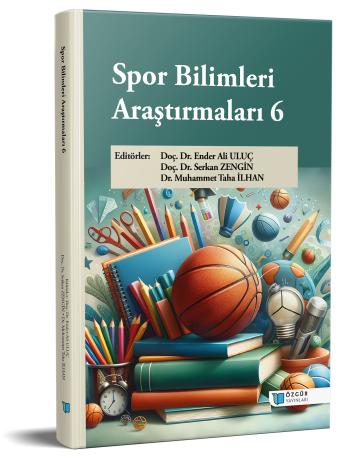
Examining the Psychological Variables Influencing the Emergence of Aggression and Anger in the Sports Environment
Chapter from the book:
Uluç,
E.
A.
&
Zengin,
S.
&
İlhan,
M.
T.
(eds.)
2025.
Sports Sciences Research 6.
Synopsis
In the context of sports, aggression and anger are considered multidimensional phenomena shaped by both individual psychological characteristics and environmental factors. A review of the literature reveals that personality traits and individual psychological variables play a significant role in determining athletes' emotional and behavioral responses. Furthermore, motivational dynamics and goal orientation are among the determining factors shaping how athletes perceive success and their performance-oriented responses. Ego-oriented athletes tend to compare their performance to others, increasing the risk of anger and aggression, while task-oriented athletes can regulate their emotional responses more functionally by focusing on the process.
Cognitive processes and perceptual variables play a decisive role in how athletes interpret situations as threats, frustrations, or injustices. The perception of frustration and threat emerges as cognitive patterns that facilitate the emergence of anger and aggression. Psychophysiological responses caused by stress and anxiety directly affect athletes' emotional control and behavioral responses; high arousal levels increase the risk of anger and aggression. In conclusion, the study suggests that aggression and anger, when managed appropriately in sports, can have supportive effects on athletic motivation and improve performance.
How to cite this book
License

This work is licensed under a Creative Commons Attribution-NonCommercial 4.0 International License.
Published
DOI
Categories
Copyright (c) 2025 Ender Ali Uluç- Serkan Zengin- Muhammet Taha İlhan; Gamze Elif Adiloğulları- Reşat Kartal- Ferhat Aktaş- Deniz Ünver- Ahmet Şahin- Büşra Baykuş- Günseli Duman