
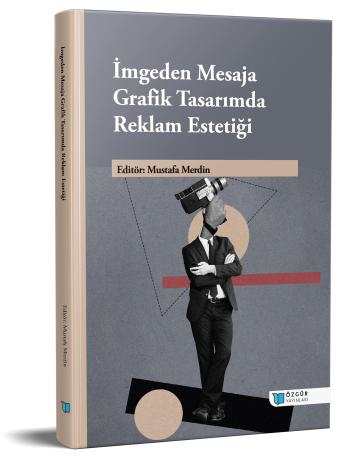
Reflections of The Archetypal Language of Fairy Tales in Art
Chapter from the book:
Merdin,
M.
(ed.)
2025.
From Image to Message: Advertising Aesthetics in Graphic Design.
Synopsis
This study aims to examine the archetypal structure of fairy tales and their multilayered relationship with the collective unconscious in contemporary art. Based on Carl Gustav Jung’s theory of archetypes, fairy tales are approached as unconscious narratives that reflect the universal and transhistorical symbols of the human psyche, while art is discussed as a field of expression that reinterprets and rearticulates these symbolic structures within contemporary aesthetic and conceptual contexts. In this framework, fairy tales are considered not merely as traditional narrative forms, but as symbolic structures that render visible the individual’s inner journey, processes of transformation, and existential inquiries.
Drawing upon the theoretical approaches of Marie-Louise von Franz, Joseph Campbell, and James Hillman, the study explores how core themes of fairy tales—such as the hero’s journey, confrontation with the shadow, death and rebirth, individuation, and transformation—are reconfigured within artists’ creative processes. Campbell’s model of the universal journey and von Franz’s interpretations of fairy tales as the “purest narrative expressions” of the collective unconscious provide a theoretical foundation for understanding the continuity of archetypal structures in artistic production.
Within this context, the works of international artists such as Paula Rego, Kiki Smith, Louise Bourgeois, Joseph Beuys, and Anselm Kiefer, as well as Turkish artists including Nazan Erkmen, Canan, and İnci Eviner, are examined to reveal how the archetypal language of fairy tales finds symbolic, psychological, and poetic manifestations in contemporary art. The selected works demonstrate that fairy tales, rather than maintaining an innocent or romantic narrative structure, are transformed into critical, plural, and transformative expressions addressing suppressed traumas, body politics, collective memory, and questions of identity.
In the final section of the study, the reproduction of the archetypal language of fairy tales across various disciplines in contemporary art is discussed. The symbolic structure of fairy tales is transformed into critical and plural forms of narration within contemporary artistic practices shaped around themes of memory, body, identity, and transformation. The works of the examined artists move beyond the romanticized narratives of fairy tales and bring to visibility the dark, suppressed, and traumatic imagery embedded in the collective unconscious. In this context, fairy tales are evaluated not as narratives belonging solely to the past, but as dynamic intellectual and aesthetic fields through which processes of individual and social transformation are questioned.
How to cite this book
License

This work is licensed under a Creative Commons Attribution-NonCommercial 4.0 International License.
Published
DOI
Categories
Copyright (c) 2025 Mustafa Merdin; Burçe Akcan- Yasemin Tanrıverdi- Burhan Şohoğlu- Ozan Küçükusta- M. Furkan Terzi- Mustafa Merdin