
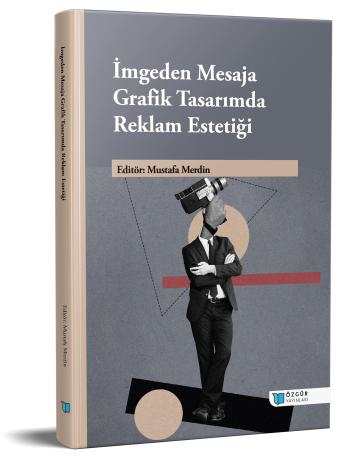
Cultural Codes in Typefaces: The Semiotic Role of Typography in the Production of Social Meaning
Chapter from the book:
Merdin,
M.
(ed.)
2025.
From Image to Message: Advertising Aesthetics in Graphic Design.
Synopsis
This study argues that typography functions not merely as a neutral vehicle for verbal content but as an active semiotic resource involved in the production of cultural meaning, ideology, and social identity. Positioned within the frameworks of social semiotics and multimodal theory, the research examines how typographic forms—such as weight, contrast, spacing, serif/sans-serif structures, and hierarchical organization—operate as culturally coded sign systems across different communicative contexts. Typography is thus approached as a mode that participates in representation, interaction, and composition rather than as a purely aesthetic or technical choice. Methodologically, the study employs a qualitative semiotic content analysis supported by a multi-layered analytical protocol that integrates multimodal transcription, metafunctional analysis, and socio-historical contextualization. Case studies include corporate and brand typefaces such as Apple San Francisco, Google Sans, Netflix Sans, and the Dior logotype, alongside vernacular and local typographic practices such as urban signage and craft-based lettering systems. These examples are analyzed comparatively to reveal how different typographic regimes encode distinct cultural and ideological narratives. The findings demonstrate that global technology brands tend to deploy typographic strategies that index neutrality, universality, and technological competence, while media and entertainment brands emphasize originality, adaptability, and digital accessibility through proprietary typefaces. Luxury brands, by contrast, mobilize typographic heritage and serif traditions to reinforce narratives of lineage, exclusivity, and craftsmanship. Vernacular typographic practices contribute to the construction of local identity and cultural memory through materiality, historical reference, and place-based expression. The study concludes that typography should be understood as a culturally loaded system of signs whose meanings are continuously negotiated through social use, technological change, and ideological circulation. In the context of increasing algorithmic and AI-assisted design practices, the article highlights the need to integrate semiotic theory, critical design analysis, and cultural sensitivity in order to prevent the homogenization of typographic expression in digital visual culture.
How to cite this book
License

This work is licensed under a Creative Commons Attribution-NonCommercial 4.0 International License.
Published
DOI
Categories
Copyright (c) 2025 Mustafa Merdin; Burçe Akcan- Yasemin Tanrıverdi- Burhan Şohoğlu- Ozan Küçükusta- M. Furkan Terzi- Mustafa Merdin