
Art-Based Emotional Awareness Education and a Neuroaesthetic Epigenetic Model for Holistic Learning
Chapter from the book:
Saygıner,
Ş.
(ed.)
2025.
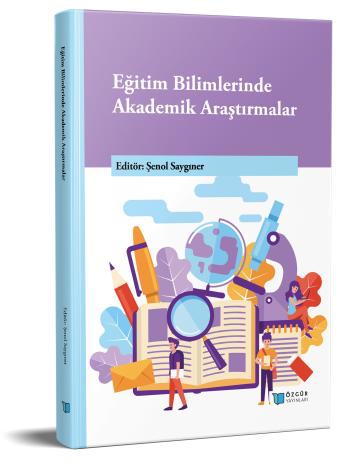
Academic Research in Educational Sciences.
Synopsis
This study proposes a holistic learning model that repositions art not merely as an aesthetic activity but as a neurobiological and epigenetic regulator that enhances emotional awareness. Drawing on recent findings in neuroaesthetics, affective neuroscience, and epigenetic biology, the study argues that learning emerges through the dynamic interaction of perceptual, neural, emotional, and environmental processes. While conventional educational paradigms emphasize cognitive performance, this model highlights the transformative potential of aesthetic experience in shaping neural plasticity, emotional regulation, and long-term adaptive responses. Methodologically, the research employs a theoretical model-building approach by synthesizing key concepts from neuroaesthetics, epigenetics, and emotional awareness theory. The proposed four-layer framework perceptual, neural, epigenetic, and pedagogical explains how aesthetic stimulation influences cognitive engagement, motivational states, and biological resilience. At the perceptual level, art activates multisensory resonance; at the neural level, it supports limbic regulation and attentional stability; at the epigenetic level, emotionally rich experiences may modulate gene expression related to stress responses and neural growth; and at the pedagogical level, art becomes a tool for designing emotionally grounded and biologically supportive learning environments. The study concludes that art-based emotional awareness education provides a powerful paradigm for integrating affective, cognitive, and biological dimensions of learning. By demonstrating how aesthetic experience can foster neural coherence, emotional balance, and long-term adaptability, the model offers a novel contribution to contemporary educational theory and expands the scientific understanding of art’s transformative role in human development.
How to cite this book
License

This work is licensed under a Creative Commons Attribution-NonCommercial 4.0 International License.
Published
DOI
Categories
Copyright (c) 2025 Şenol Saygıner; Ahmet Akıncı- Şenol Saygıner- Duygu Gülçiçeği- Türkay Bulut- İsmail Eraslan- Mahmut Celalettin Keçeci- Merve Çelik- Özge Öztürk- Ferhat Bahçeci- Özge Çınar Barut- Yağmur Ulusoy Doğmuş- Beyhan Bayrak- Semra Bilim Koçer- Abdülkadir Yüksel